Showing posts with label Insects. Show all posts

Sunday, September 25, 2022

Fireflies can be the particles of the next-generation cyborg bug swarms.


Cyborg bugs or microchip-controlled bugs are a reality. Those things are normal insects that operate under the control of microchips. The cyborg insects are the next-generation tool for many things. The problem with mechanical drones is that their operational time is so short. 

But the living bug can eat nutrients, and their neurons can interact with nano-technical microchips. Microchip-controlled bugs like cyborg fireflies can make a swarm. That is very flexible and hard to destroy. The interaction between neurons of those bugs and microchips is making it possible to benefit those fireflies' light organs in the communication of those cyborg insects. 

The microchip will interact with the neurons of those insects, and it can be connected with the relay systems which can be helicopters, drones, or even satellites. If those microchips can control the flashes of the insects' light organs they can use optical communication at a longer distance. 

The system can decode the electric impulses of those fireflies. Or the microchip can equip with nano-size optical instruments that see those flashes. The problem with nano-drones is the communication with the controller. The reason for that is that nano-size microchips cannot create powerful electric signals. 


The microchip-neuron compilation is a powerful tool for the half-organic microsystems. 


Living neurons can give electricity to nano-size microchips. Feeding those neurons is easier than creating low-power electricity that will not destroy those microchips. That technology makes it possible to create powerful computers that don't need very much power. 

The data can transfer to neurons through those microchips. And then the decoder can transfer that data to computer screens. In some models, the neurons are between two layers of those extremely small microchips. But if those microchips are implanted in insects. 

They can create an extremely flexible intelligent drone swarm. That cyborg bugs are offering highly mobile platforms for AI-controlled entireties. 

The nanotechnical microchips can take their electricity from the nervous system of the insects. That thing will make it possible to create low-power electricity. That is needed for those microscopical systems. Living neurons are making it possible to create needed low-voltage electricity that will not jump over the switch. 


Image 1: https://scitechdaily.com/physicists-unlock-secret-to-synchronization-from-flashing-fireflies-to-cheering-crowds/


Image 2: https://www.nextbigfuture.com/2012/01/darpa-hybrid-cyborg-insects.html


https://artificialintelligenceandindividuals.blogspot.com/

Tuesday, August 23, 2022

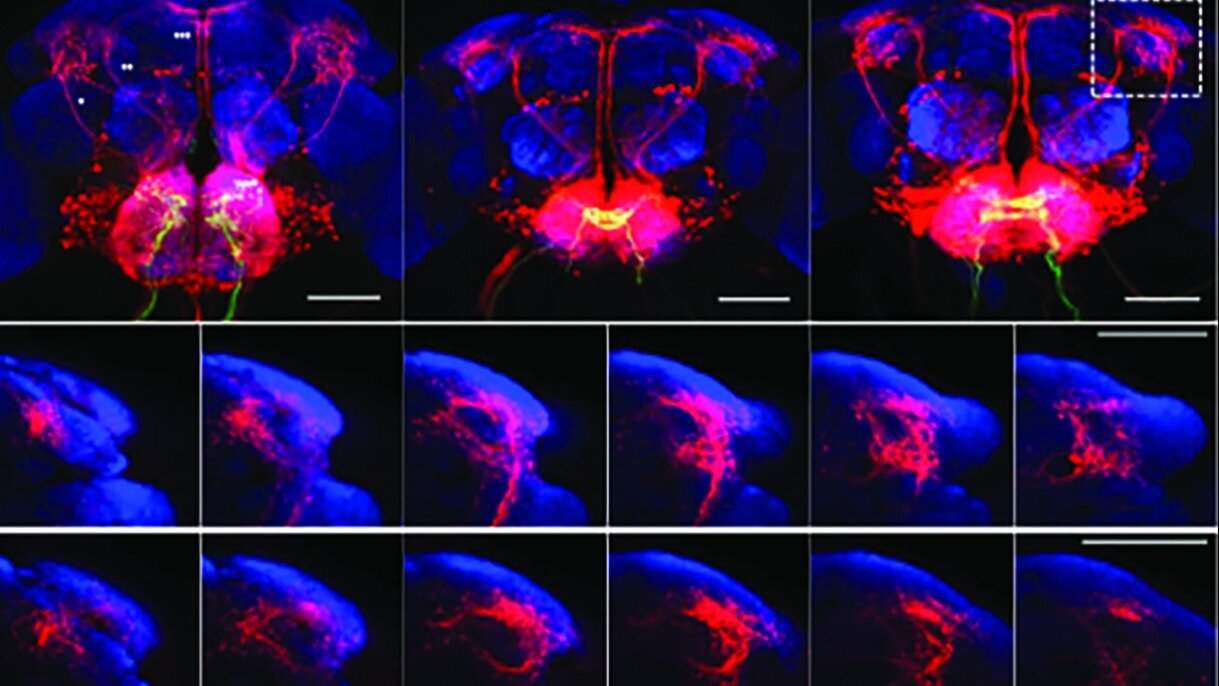
Researchers found out how flies' brains respond to tastes.


"A new imaging technique called trans-Tango(activity), developed by researchers with the Brown's Carney Institute for Brain Science, reveals how specific neurons in brain circuits of fruit flies respond to stimuli such as sweet and bitter tastes. Credit: Gilad Barnea". (Phys.org/Using new technique, researchers make surprising discoveries about how flies' brains respond to tastes)

New miniature systems called "trans-Tango" open a view of the insects' brain activity. That system can observe the activity of individual neurons. That can revolutionize neurology. This kind of system can collect information on how the insects find their food.  And how they observe predators. Maybe quite soon, those systems can install in drones, controlled by artificial intelligence. So they can observe insects in their natural environment. That kind of information can use to create a new type of insect repellent. 

But the information on how the insect's brains work can give vital information. The researcher can use that information for the systems that are controlling nanotechnology. The insect's neurons can install in the nanorobots that can use to find and destroy cancer cells. The fact is that those nanomachines can also use to clean blood from poisons. 

The next generation tool for medical work can be the biorobots. Those robots are things like worms that can destroy tumors or eat plague from the blood vessels. Worms like Elegans worm can be a microchip implanted. And they can be controlled by radio systems like BlueTooth. In that case, the receiver uses nanotechnology. 

Those worms or their neural system can also create electricity for those extremely small electronic components. Those worms can also use to clean toxic chemicals from the blood vessels. And that thing makes them interesting in the point of view of medical work. 


https://phys.org/news/2022-08-technique-discoveries-flies-brains.html

Image 1:) https://phys.org/news/2022-08-technique-discoveries-flies-brains.html

https://artificialintelligenceandindividuals.blogspot.com/

Sunday, January 16, 2022

What if we can project the memories of another species to the computer screen?


"A conceptual drawing of the new molecular device. For experiments outside the human body (in vitro), the device would nest on the cell's membrane: A “reporter” molecule would detect the local electric field when activated by red light; an attached “modifier” molecule would alter that electric field when activated by blue light. Credit: Katya Kadyshevskaya, USC"   (Phys.Org/Researchers create a molecular device that can record and alter cells' bioelectric fields without creating damage)


Tardigrades might be the first interstellar travelers.


Tardigrades are extreme animals that can survive even from interstellar travel that might take centuries. Those tiny animals can go to hibernate where they can stop their metabolism. But the thing is that the tardigrades can also use to bring a date from the interstellar probe. The idea is that the tardigrades will be superpositioned and entangled.

That thing happens by cloning those small animals. And then another tardigrade of those tardigrade pairs would be in the chamber. Then another tardigrade can send to the exoplanet planet in the chamber. 


The chamber will send to another star by using a laser ray. And that makes it possible to entangle the tardigrades with their cloned pairs on Earth. 


Then those two tardigrades will be quantum entangled. And the data will send to Earth. The idea is that the EEG of the primitive nervous system of tardigrades can use to collect data from the surface of the strange planet. The thing is that if the interstellar probe has enough power. 

There is a possibility. To make quantum entanglement between the tardigrades from that probe to the laboratory on Earth. Using superpositioned tardigrades. The thing is that this kind of vision requires extremely high power energy. 

But the superpositioned and entangled tardigrades offer the possibility to collect data from the Earth. The small chamber where those animals will be. Can install in quadcopters or some other drones. Also, superpositioned tardigrades can offer interesting data transmission tools for satellites. And of course, the experiences that those experiments are giving can help to make the interstellar flight. 

The thing is that the superpositioned and entangled particles are the only known way to make the real-time communication channel between the craft and Earth. If the electromagnetic wormholes would not able to make. 

But even if that quantum teleportation would not work. There is another possibility to use those tardigrades. The tardigrades nervous system actions. Will send to Earth. And then, the electromagnetic curves of those signals will play to those laboratory tardigrades. That means the researchers can search the reactions of those organisms. Or maybe the researchers have created a way to decode the nervous signals or observations of the tardigrades to the computer screen. 


The miniature machine can act as the antenna that sends data to the detector. 


Maybe that day is sooner than we even think. There is created a molecular machine that can monitor the actions of the nervous system. And that thing can revolutionize neurology. But it can also make it possible to read the actions of the neurons of small animals like insects. The system will base the idea of the triangular molecule that is stressed with the EM-radiation. 

That radiation will increase the quantum- or EM field of that machine. The detector detects the interaction between the electromagnetic field of that nanomachine and the nervous system. The ability to read the memories of another species would give an interesting vision even without interstellar travel. 


The increasing knowledge of memory improves our way to observe the world. By "using eyes of another species". 


The knowledge of the memory is increasing all the time. We know that memory is not storing only one area in the brain. And the purpose of that thing is the damage in the brain. Cause the minimum damage to the memory where all units are stored in the most minimum data units. 

And the neurons can connect those memory centers. The new nanomachines can be put to cover the entire brain core and that thing can use to transmit the EEG to sensors. Maybe someday we can create a system that can decode the EEG and then transmit the memories of the animals and other humans to the screen of computers. 


https://www.discovermagazine.com/the-sciences/how-a-tardigrade-micro-animal-became-quantum-entangled-with-superconducting


https://human-memory.net/memory-the-brain/


https://www.livescience.com/tardigrade-quantum-entangled-experiment


https://www.livescience.com/60862-tardigrades-laser-ride-outer-space.html


https://phys.org/news/2022-01-molecular-device-cells-bioelectric-fields.html

Saturday, January 1, 2022

Primitive animals like insects can use for modeling new types of data handling tools for small-size robots.

 Primitive animals like insects can use for modeling new types of data handling tools for small-size robots. 


Image 1:

Why scientists are interested in how the fly is navigating in 3D space? Primitive animals make many things by using a couple of neurons. And that process can copy to the computers which are used to navigate things like drones. The fact is that also things like flies and butterflies are migrating. And that ability can copy to things like drones. The ability to understand the operands of the neurons makes it possible to make more autonomic and more independent robots. The problem with computers is that the things like butterflies can make many things that computers are making. 

But the problem is that butterflies or flies are needed less space than computers. So the system that some monarch butterflies are using in their lifetime is more compact than some supercomputers. If we want to make a long-range drone that can make the same things with monarch butterflies it requires outsourced computers. Theoretically is quite easy to make a robot butterfly that has an operation range even thousands of kilometers. 

Daytime that robot can use miniaturized solar panels- And night time it can use miniaturized fuel cells which are using ethanol or methanol as the fuel. But the problem is that this type of robot needs outsourced computers. So the thing is that the butterflies might have fewer neurons than in some supercomputer has microchips. But the butterfly makes more things with its neurons. 

Image 2:


xxxxxxxxxxxxxxxxxxxxxxxxxxxxxxxxxxxxxxxxxxxxxxxxxxxxxxxxxxxxxxxx


Modern microchips can turn any neuron into a biocomputer. 


There is the possibility to turn the brains of the bugs into the biological computer. The system requires "only" that the similar microchips that are used to control the actions of bacteria will install in the neurons of those bugs. 

The data that is wanted to process in those neurons can be input to them by using those microchips. That kind of system can use to turn living bugs into zombies or cyborgs that can be remote controlled. Also, that kind of system can use to create more powerful data handling units. 

The computer has used lights to control cyborg bacteria. Similar technology could use to transmit data to neurons. But new nanotechnical microchips are more powerful tools. And they can transmit data to neurons benefiting magnetite crystals in the neurons. 

Or those microchips are interacting with axons. They can send a nano-size electric wire to the axon and transmit data in there by using electric impulses. 

https://www.futurity.org/cyborg-bacteria-cybergenetics-1275212/

xxxxxxxxxxxxxxxxxxxxxxxxxxxxxxxxxxxxxxxxxxxxxxxxxxxxxxxxxxxxxx


Researchers can use knowledge of how the nervous system of insects is working to create more economical and powerful computers. 


But the times are changing. There is the possibility to implant nano-technical microchips in the bug's nervous system. Those systems can give orders to them. And then, they can store the nervous signals what those bugs are creating. After that, the bigger drone can call those bugs to it and it can download the memory of those microchips. The ability to encode and decode the EEG of the bugs is one of the amazing visions in the world. That thing makes it possible to use those things as biological surveillance systems. 

The thing is that making hybrid computers where living neurons are connected with microchips is one of the most fascinating ideas in computer science.

The computers that are connected with living neurons are the most powerful tools in history. If we want to create a system that uses fuzzy logic use of living neurons is the best opportunity. The problem is that the abilities of that kind of hybrid computer are unknown. The thing that makes regular computers safe is simple. Operators can select and download controlled data to it. 

If we are connecting computers to living neurons. We are creating a cyborg. A cybernetical organism means that the system might have consciousness and will like all other creatures. This kind of system has also the ability to defend itself. How the system interacts with people is depending what kind of tools it has. And the second thing is that the system must know how to use those tools. 

Living neurons are the thing that is giving so-called wild card ability for computers. Genomes are controlling the behavior of the species. And if those neurons are taken from the insects are put in the combat drones. That drone can believe that it's the monarch butterfly. So before that kind of system is put in use neurons must be cleaned. 

That means the heritable memories and fears must remove from their DNA. Researchers must make this type of thing. Before we can start to make the hybrid microchips there is an organic part. That connected to the regular microchips. The regular microchips needed to act as the port between neurons and quantum systems. The problem with quantum computers is that they are large-size systems. 


https://scitechdaily.com/navigation-neuroscience-how-a-flys-brain-calculates-its-position-in-space/


https://thenextweb.com/news/scientists-created-biological-quantum-circuit-grisly-experiment-tardigrades


https://en.wikipedia.org/wiki/Monarch_butterfly


Image 1:)https://scitechdaily.com/navigation-neuroscience-how-a-flys-brain-calculates-its-position-in-space/


Image 2:) https://en.wikipedia.org/wiki/Monarch_butterfly


Thursday, December 2, 2021

Cyborg insects, fishes, and spiders


 Cyborg insects, fishes, and spiders 


Microchips can also implant in sea living organisms. And they can control fishes and crabs. 

The microchip implanted insects are not always flying bugs. The thing is that also many other animals than just some flying insects can be implanted with microchips. Also, water-living organisms like fishes,  crabs, and spiders can equip with microchips. The krill is one of the most promising groups of animals that can equip with microchips. That is collecting data about things like water temperature. 

There is the possibility that the microchip is ordering the krill or fish. Rise to the surface after a certain time. And then that microchip is delivering data that is stored in it. That data can deliver to satellites or aircraft or drones by using laser-LEDs. Also, acoustic microchips can deliver their data to the submarines. The military forces are interested in that kind of advanced biological weapons like remote-control animals. 

If things like dogs can be remotely controlled, by using EEG implants. That thing means those dogs don't need education. And that means the dogs can step into service very fast. But those systems are turning all kinds of animals into remote-controlled robots. 


The biorobots like crabs can use to carry surveillance or sabotage devices to the ground. Small-size detonators can be delivered to the positions like underwater cables by using remote-control animals. 


The AI-based technology allows decoding the memories and transmitting the senses of the other species. To the screens of the operators. Maybe this technology is not yet in use. But these kinds of things are under development. 

The thing is that microchips can be used to control those animals. And that thing allows controllers to use them as biological recon robots. The big crabs can also use to bring things to the surface from the ocean floors. The thing is that the microchips that are implanted into the nervous systems of the things like sharks are turning them into robots. 

The wireless communication between the microchip implant and the controller can make the sharks perfect recon tools and the perfect advanced biological weapons. The microchip can be implanted by using submerged drones. And if the electric signals of the nervous system can decode. That thing allows that operators can see the things that the shark sees. And the sharks and big crabs are also powerful tools for damaging things like underwater cables. Of course, those things can use to harm people. And that is the shadow-side of that technology. 


Image: 

https://www.insidescience.org/news/brief-worlds-smallest-remote-controlled-cyborg-bug


https://interestandinnovation.blogspot.com/

Gluons and the strong nuclear interaction.

When we think about energy flow from the strongest to the weakest. Free energy. That causes an atom’s decay. It is formed. Or. Released in t...