Showing posts with label pluto. Show all posts

Tuesday, August 26, 2025

Uranus’ new moon and suspicion of Planet Y.

 Uranus’ new moon and suspicion of Planet Y. 


“James Webb has revealed Uranus’ smallest moon yet, a six-mile-wide world hidden near its inner rings. This discovery pushes the planet’s moon count to 29 and shows how Webb can uncover secrets Voyager 2 never saw. Credit: NASA, ESA, CSA, STScI, M. El Moutamid (SwRI), M. Hedman (University of Idaho)” (ScitechDaily, Uranus Has a Tiny New Moon and It’s Only Six Miles Wide)

JWST found a new moon called S/2025 U 1 near Uranus. Did the Uranus planet capture its tiny, newfound moon after the Voyager 2 flyby in 1986? The width of that moon is about 6 miles. And it is hidden in Uranus' inner rings. 

Researchers noticed the new moon that orbits Uranus. That tiny moon is interesting. Because Earth-based instruments found it. That new Uranus moon is not a very big object.  But it's remarkable, and the interesting thing. But I think that researchers should have found that moon before. So, could that small moon have made a transit movement to orbit the Uranus planet in the near past? That means something pulled that moon out from the Kuiper Belt.

In this hypothesis, that is the new moon for that gas giant. Something in the Kuiper Belt pushed that thing out from its trajectory. That new moon called S/2025 U 1 is the new moon for the Uranus moon family. And that tiny moon, which is only six miles wide, orbits near that planet. The Voyager spacecraft should have found that tiny moon during its flyby in 1986. So that supports the model that Uranus captured that moon after the Voyager flyby.


“A new SwRI-led JWST survey discovered S/2025 U 1 (approximate location indicated in yellow), a tiny moon orbiting Uranus between the satellites Bianca and Ophelia. If it has an albedo comparable to other nearby moons, this object is probably around six miles in diameter, by far the smallest moon in the Uranus system to date. The solid ellipses indicate rings, while the dotted lines show the orbits of many of the inner moons. Credit: Public Domain” (SwRI), M. Hedman (University of Idaho)” (ScitechDaily, Uranus Has a Tiny New Moon and It’s Only Six Miles Wide)


Forget planet X, there might be a planet Y in the Kuiper Belt. 


Above: Why is there no dust on the white snow area on Pluto? That tells us that the white snow area is born recently. Or something pulls particles out from that. 

Some people believe that there is a planet X, or the ninth planet, somewhere, outside Pluto’s orbit. Planet 9 is a very well-known theory. There is a suggestion that Planet 9 is about three to seven times as massive as Earth. And that orbits the sun at the edge of the solar system’s gravitational pool. There can be something smaller, an Earth-size icy world hiding in the Kuiper Belt. Or outside it. Planet Y is not such a well-known theory. Than the Planet 9. 

The white area on Pluto’s surface can be a cryovolcano or a result of the recent cryovolcanism-type seismic effect. That thing can form because of the Charon-moon gravity. But there is another possibility. Something far stronger than the gravity effect can cause tidal waves that activate the cryovolcanism. The thing. What makes that white area interesting is that. There seems to be no dust in that area. That means it formed quite recently. Pluto is far lighter than Earth. And that means Charon’s tidal forces are far stronger on that dwarf planet’s surface than they would be on Earth. 


"Three years after NASA's New Horizons spacecraft gave humankind our first close-up views of Pluto and its largest moon, Charon, scientists are still revealing the wonders of these incredible worlds in the outer solar system. Marking the anniversary of New Horizons' historic flight through the Pluto system on July 14, 2015, mission scientists released the highest-resolution color images of Pluto and Charon. These natural-color images result from refined calibration of data gathered by New Horizons' color Multispectral Visible Imaging Camera (MVIC). (Wikipedia, Charon)

The processing creates images that would approximate the colors that the human eye would perceive, bringing them closer to “true color” than the images released near the encounter. This image was taken on July 14, 2015, from a range of 46,091 miles (74,176 kilometers). This single color MVIC scan includes no data from other New Horizons imagers or instruments added. The striking features on Charon are clearly visible, including the reddish north-polar region known as Mordor Macula." (Wikipedia, Charon)


Pluto has five known moons, and that makes the new Uranus moon very interesting. But could those moons common gravity effect be strong enough? To hover those particles out from Pluto's surface? Charon itself is grey, and it can be covered by cosmic dust. But was that moon once in the middle of the cosmic dust flow? And why do those particles not reach Pluto?

The problem is: why is there no visible cryovolcanism or cyoseismic effect in the images? Which New Horizons tool during its flyby? If that cryovolcanic effect happened only once. That would cause interesting thoughts. 

Researchers are finding tips that the large, maybe, Earth-mass planet can hide in the Kuiper Belt. That planet can be more interesting than Planet 9. Planet Y can give some answers to the Early solar system formation. But researchers need more evidence. To confirm the existence of this icy Earth. Maybe the Vera Rubin Observatory can give an answer for that question.  The researchers can use the accumulation of the dust and gas around hiding objects that could hide at the edge of the solar system. 

The problem is that those objects are very cold. And if they used their internal thermal source, those big planets can turn invisible to the IR sensors. But their gravitational effect can disturb their moons. Big and heavy objects capture smaller objects around them. And maybe the tidal forces can form the cyovolcanism in those small objects. The Kuiper Belt is a very stable environment. If there are big planets, their trajectories can be so far away from the Sun and other planets that they can escape from our solar system. 


https://dailygalaxy.com/2025/08/planet-y-haunting-space-beyond-neptune/


https://www.earth.com/news/planet-y-signs-of-a-world-hiding-in-our-solar-system/


https://www.newscientist.com/article/2493480-there-might-be-a-planet-y-hiding-in-the-outer-solar-system/


https://scitechdaily.com/uranus-has-a-tiny-new-moon-and-its-only-six-miles-wide/


https://en.wikipedia.org/wiki/Charon_(moon)


https://en.wikipedia.org/wiki/Planets_beyond_Neptune


https://en.wikipedia.org/wiki/Pluto


Thursday, July 10, 2025

Water crystallization in low gravity and temperature can open new ways to model water.


"The Universe’s most abundant ice isn’t formless—it’s secretly laced with crystals. And that might change how we think about water, planets, and life itself. (Artist’s concept.) Credit: SciTechDaily.com
Scientists have uncovered a hidden structure inside the Universe’s most common ice—found on comets, moons, and interstellar dust—challenging decades of belief." (ScitechDaily, Tiny Crystals Hidden in Cosmic Ice Could Rewrite What We Know About Water and Life)

The new observations about the water crystallization can open new models for water and life in the universe. When water crystallizes at a very low temperature and under weak gravity it can form microcrystals. Those microcrystals are something that doesn’t form on Earth. The microcrystals can form a structure alone or with some liquid gas that makes it look like liquid. If there is liquid nitrogen or helium between those microcrystal bites that thing can cause a situation where those crystals can form the “icy quicksand”. 

That means those crystal ice bites behave like sand in quicksand and the liquid gas acts like water in quicksand. There is a possibility that the extremely small nanocrystals could form the liquid-looking structure on icy planets. Those new observations about water behavior open the road to making models about the lifeforms. Or, sharper saying the DNA, or mRNA controlled icy crystals can exist on some distant worlds. In those ultra-cold conditions, the DNA or RNA can make those crystals act like cells act in our planet. 

The image of Pluto from the New Horizons probe. The white structure near the pole seems to be some kind of geyser or “icy volcano”. That means Pluto's low gravity along with the Kharon moons' gravity effect and tidal forces can keep water from moving on that strange world. If there is liquid water on that dwarf planet. 


“In this image of Pluto’s surface, the red luminance corresponds to the infrared data acquired by the Ralph/MVIC instrument carried by New Horizons. Credit: NASA/Johns Hopkins University Applied Physics Laboratory/Southwest Research Institute/ZLDoyle” (ScitechDaily, New Horizons Reveals Dunes Made of Tiny Grains of Solid Methane on Pluto)

That doesn’t mean. The undersurface ocean must cover the entire planet. There can be small “lakes” on that dwarf planet. Maybe most of the liquid is methane, nitrogen, and other gases. Those lakes that can hold water can be below the white cap near Pluto’s pole. 


The theory about quantum water is also interesting. 


On distant planets, water is at the minimum energy level. The hydrogen and oxygen atoms are in their maximum size. And those atoms form the Bose-Einstein condensate. There is a possibility that the weak gravity along with other effects can turn those water molecules straight and make them spin very fast. In that case, the water molecules that are very low can be unable to make bonds with the other water molecules. That means in the low temperature and low gravity it is possible that the water remains in a form that looks like liquid. 

This kind of liquid water is nothing that we see on Earth. This kind of phenomenon can be possible only in a low-pressure, lowest possible temperature, that is near 0K. And the third thing is the ultra-low gravity field. The low gravity field can keep water liquid far below zero. The thing that keeps water in liquid form is the whirls that move the water. 

If we think of dwarf planets like Pluto and Eris and their moons, their gravity is very low. And the other thing is that those objects are very thin. The third thing is that the gravitational effect of their moons like Kharon is stronger than on Earth. That can cause conditions where the whirls can keep the water liquid even in those extremely low temperatures. Tidal forces of those moons are more powerful because the dwarf planet's gravity is not very strong. 


https://scitechdaily.com/new-horizons-reveals-dunes-made-of-tiny-grains-of-solid-methane-on-pluto/


https://scitechdaily.com/tiny-crystals-hidden-in-cosmic-ice-could-rewrite-what-we-know-about-water-and-life/


Friday, September 15, 2023

The black holes can be closer than we expected. But how close they can be?

   The black holes can be closer than we expected. But how close they can be?


Researchers found the closest black hole-candidates in the Hyades star cluster. "The Hyades Star Cluster is the closest cluster of stars to the Sun. The Hyades open cluster is bright enough to have been remarked on even thousands of years ago, yet is not as bright or compact as the nearby Pleiades (M45) star cluster. Pictured here is a particularly deep image of the Hyades which brings out vivid star colors and faint coincidental nebulas. Credit & Copyright: Jose Mtanous" (ScitechDaily.com/Hyades Star Cluster Revelations: Earth’s Nearest Black Holes Uncovered) 


Distance to black holes is hard to measure. The massive gravity in the black holes stretches light, causing enormous redshift. That's why the black holes can easily seen being at longer distances than they are. There is a theory that black hole is lurking even inside our solar system. The idea is that the mysterious "Planet X" that causes anomalies in Neptune's trajectory is about a grapefruit-size black hole. But the question is, how that black hole can be stable? 


Why would it not vaporize? The thing that causes questions about that black hole is the mysterious X-ray flares in Uranus' atmosphere. The source of those X-ray flares is high-energy particles. And one of the possible sources for those high-energy particles is a black hole in our solar system. 


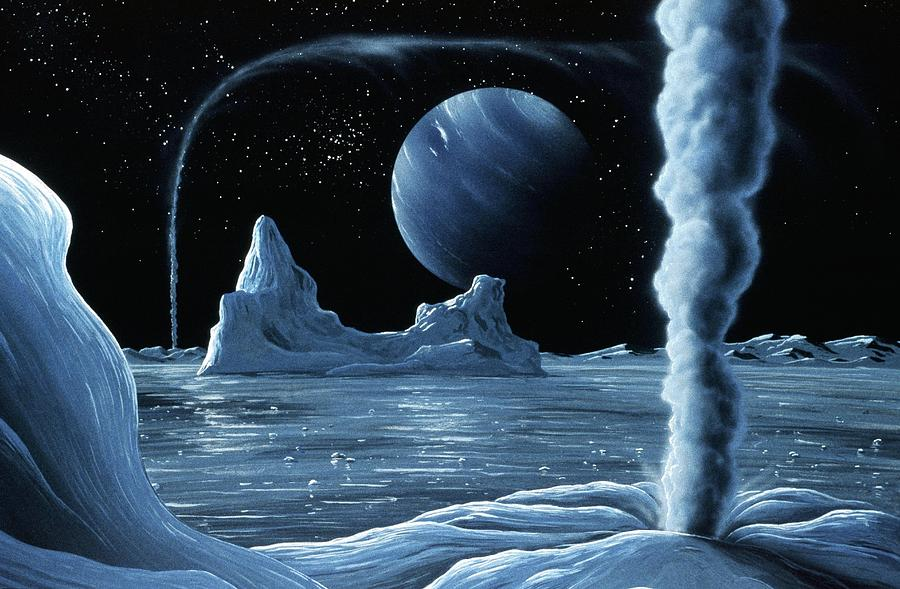
Above: Artist's impression of Triton's cryovolcano. 


Cryovolcanoes or nitrogen smokers on Triton. 

Another thing that causes questions is the mysterious black nitrogen smokers on Triton Moon. There is some kind of ray-shaped energy impact that forms those icy geysers on that icy moon. Could the thing that causes those black geysers be the Einstein-Rose bridge or wormhole that travels through Triton? Conditions on that icy moon should be extremely stable. And the temperature along with gas pressure are very low. So forming the icy geyser requires some kind of energy impact. 

And if that energy impact would be some kind of gravitational effect from Neptune that causes a much larger volcanic phenomenon. The third thing that causes questions is the fresh ice at Pluto's south pole (down in the image). That fresh ice seems like some kind of eruption from under the icy shell of that dwarf planet. What causes that quite large water eruption on that dwarf planet? 

Dwarf planet Pluto in New Horizon's image. You can see white fresh ice at its south pole. The interesting thing is this. The white material seems to travel in two directions. And it is, of course, possible that Charon's moon's gravity causes that thing. But is its gravity strong enough that it causes that effect? And what is another particle flow's, or another effect's source that causes the other route for that Y-shaped ice structure? 


Is there some kind of common mass center between the Sun and Proxima Centauri?


The thing that causes questions about the common mass center between Alpha Centauri and the Sun is Proxima Centauri. Or Alpha Centauri C: which is another name for Proxima. That orbital period is very long, and that could explain why Proxima is so long the closest star to the Sun.  The Proxima system travels around Alpha Centauri in  547000(+6600−4000) years. 

That red dwarf is the third participant in the Alpha Centauri binary star system.  Proxima Centauri orbits Alpha Centauri A and B. And that means it should sometimes turn in the opposite direction from the sun to another side of Alpha Centauri. 

So how long does that star remain as the closest star to our sun? If there is some kind of common mass center between Alpha Centauri and the Sun, that thing causes the situation that Proxima Centauri is always the closest star to our solar system. The only invisible mass center is a black hole. 


https://edition.cnn.com/2021/04/01/world/uranus-xrays-detected-scli-scn-intl/index.html

https://www.go-astronomy.com/planets/neptune-moon-triton.htm

https://www.nasa.gov/image-feature/detecting-x-rays-from-uranus

https://phys.org/news/2019-09-planet-primodial-black-hole.html

https://scitechdaily.com/hyades-star-cluster-revelations-earths-nearest-black-holes-uncovered/

https://en.wikipedia.org/wiki/Cryovolcano

https://en.wikipedia.org/wiki/Proxima_Centauri

Thursday, December 22, 2016

Tulevaisuuden supernopeat rautatiet yhdistävät maailman, ja ehkä ne joskus kaukaisessa tulevaisuudessa vievät ihmisen jopa aikamatkalle.

Tulevaisuuden rautatiet rakennetaan todennäköisesti putkien sisään. Nämä putket on tuossa skenaariossa varustettu eräänlaisilla hiukkaskiihdyttimillä eli gaussin radoilla, mitä pitkin junaa sitten ikään kuin vedetään magneettien avulla. Tuo juna leijuu magneettien päällä sähköisen hylkimisen avulla, ja jos tuossa putkessa on magneetit ympyrässä putken pintaa pitkin, niin silloin juna leijuu keskellä putkea. Tämän ratkaisun toteuttaminen vaatisi kuitenkin sellaisia investointeja, että niitä ehkä ei aivan heti tulla tekemään.

Kyseinen ratkaisu muistuttaa CERN:issä käytettävä syklotronia eli hiukkaskiihdytintä, ja tuolloin saadaan aikaan nopeuksia, joita ei mikään lentokone voisi saavuttaa. Mutta noiden tyhjiöputkessa toimivien junien ongelmana on niiden tarvitseman infrastruktuurin hyvin korkea hinta, eli tässä ehkä joskus aikaisemminkin mainitsemasani ratkaisussa käytetään nimenomaan näitä magneetteihin perustuvia junia, joiden etu lentokoneeseen nähden on se, että ne eivät voi törmätä mitenkään toisiin kohteisiin, koska juna liikkuu suojatussa putkessa.

Tämän takia kyseinen juna olisi erittäin vaarallinen sikäli, jos vaikka sen nopeus kasvatettaisiin kymmen kertaiseen äänen nopeuteen, mikä on esimerkiksi ratatykin ammuksen lähtönopeus. Sitten voi käydä niin, että juna menee ikään kuin ohi aseman. Tietenkin törmäys putkessa on helppo välttää, niin että niissä olisi kerrallaan vain yksi juna, joka vaihtaa kulkusuuntaa putken päissä, mutta jos juna sitten ajaa ohi aseman, niin seinään osuessaan siitä vapautuu valtavasti kineettistä energiaa, mikä sitten voi aiheuttaa tuhoja hyvin laajalla alueella.

Toinen mahdollisuus olisi tehdä junaradan päähän valtavat kaaret, joiden läpi juna sitten kulkee, ja tuossa mallissa ei myöskään saisi käyttää kuin yhtä junaa kerrallaan, jotta mitään törmäyksiä ei pääse tapahtumaan. Tuollainen erittäin nopea juna mahdollistaisi toimiessaan sellaiset kulkuyhteydet, joita ei koskaan ennen ole ihmiskunnalla ollut,  Ongelma on sitten tietenkin siinä, että jos junaa liikutetaan magneettien avulla putken sisällä, kuten hiukkaskiihdytin siirtää hiukkasia sisällään, niin silloin sen nopeus kasvaa helposti erittäin suureksi, ja mikään ei oikeastaan estä sitä saavuttamasta valon nopeutta, ja mikäli tuollainen junarata rakennetaan maapallon ympäri, niin silloin voisimme rakentaa junan, joka toimii ikään kuin aikakoneena. Tuo väline perustuu siihen, että kun kappale saavuttaa valon nopeuden, niin aika sen sisällä pysähtyy.

Tuossa mielikuvituksellisessa ratkaisussa junan nopeutta kiihdytetään tuossa kiihdytinputkessa niin paljon, että se saavuttaa valon nopeuden, jolloin aika sen sisällä ikään kuin pysähtyy  Se että tällainen valtava kiihdytin voidaan rakentaa oikeasti vaatii tietenkin sellaisen infrastruktuurin, että sellaista ei koskaan olla rakennettu. Mutta lähdetään sitten miettimään, millainen tämä tulevaisuuden "aikakokone" tai "juna tulevaisuuteen" oikeastaan olisi. Tietenkin tuon kiihdytinputken pitäisi olla täysin pyöreä, eli siinä ei saisi olla mitään korkeuseroja tai mutkia, mikä vaatii valtavia tukirakenteita meren pohjaan, ja myös sellaisia kallioleikkauksia, mitä ei ainakaan meidän elinaikanamme sitten koskaan tulla edes vakavasti miettimään.

Tuo putki rakennettaisiin siis päiväntasaajan kohdalle, ja siihen tarvittavaa materiaalia pitäisi ehkä hakea kuusta asti. Tuo valtava kiihdytinputki peitettäisiin betonisella suojaputkella, ja sitten sen sisään asennettaisiin tuon järjestelmän vaatimat valtavat magneetit, joiden tehtävä olisi junan leijuttaminen tuossa putkessa. Nuo valtavat magneetit myös liikuttaisivat junaa pitkin putkea, ja niiden vaatima kuparin määrä olisi erittäin suuri. Kyseiset magneetit pitäisi jäähdyttää lähelle absoluuttista nollapistettä, jotta ne olisivat suprajohtavassa tilassa, jolloin virta kiertää noissa käämeissä ilman vastusta. Ja silti vaadittavan energian määrä olisi valtava. Sijoittamalla tämä laite päiväntasaajalle voidaan noita ongelmia ratkoa tuottamalla osa tuon kiihdyttimen vaatimasta energiasta paikallisesti aurinkopaneeleilla, jotka on sijoitettu sen viereen.

Mutta kuten varmaan arvaatte, niin näiden välineiden rakentaminen ei aivan pikaisesti tapahdu. Näet se että investoisimme tuollaiseen vakavasti tuollaiseen välineeseen, vaatii sellaisia summia rahaa, että mitään realistista markkinarakoa tuolle laitteelle ei ole. Samoin poliittinen vastarinta voisi oikeasti olla melkoinen, mutta ehkä joskus saamme valtioiden väliset erimielisyydet loppumaan ja kansalliset konfliktit päätökseen, niin silloin tällainen superjuna tulevaisuuteen olisi mahdollinen. Ja ehkä sen rakentaminen olisi realistista sitten kun ihmiskunta on ensin lentänyt Plutoon, koska sinne voidaan sitten rakentaa tällaisia rakennelmia melkein ilmaiseksi, mutta silloin tietenkin tarvitaan valtava määrä ydinvoimaa, jotta tuo väline saadaan toimimaan, ja tuolloin pitää ensin tietenkin päästä lentämään ulkoplaneetoile, ja sitten sinne pitää perustaa pysyvä tukikohta.

Toki tuo tukikohta voi toimia robottien avulla, eli siellä operoisivat tekoälyä käyttävät automaatit, ja tuollaisessa mallissa ei kenenkään tarvitsisi lähteä tuonne kauas aurinkokuntamme rajoille, vaan siellä työtä tekisivät robotit, jotka korjaisivat toisiaan sekä suorittaisivat kaikki muutkin operaatiot, ja jossain kirjassa muistaakseni oli kuvaus tällaisesta tukikohdasta, joka oli tehty salaa tuonne aurinkokuntamme rajoille ilman presidenttien tai YK:n lupaa. Tietenkin tuollaisen robottitukikohdan luominen tuonne kauas maapallosta olisi teoreettisesti mahdollista.

Eli avaruuteen vain lähetetään raketti, joka vie tarpeelliset robotit lennolle tuonne kauas. Ja kun puhutaan siitä, että avaruuteen lähetetään ihmisen näköisiä robotteja, niin silloin tietenkin pitää muistaa se, että nämä välineet voivat lentää kohdeplaneetalleen ilman alusta, ja sitten rakentaa sinne aseman, ilman että kukaan huomaisi yhtään mitään. Mutta kuten tiedämme, niin aina voidaan kysyä, että miksi kukaan tällaista sitten tekisi? Miksi tällainen lento salattaisiin? Mutta kuten tiedämme, niin tutkimattomia ovat herran tiet, ja ainakin tästä aiheesta voidaan tehdä mukava TV-sarja tai vastaavaa, eli mitenkään hyödyntämätön tämä ajatus kuitenkaan ei ole, joten se on tuonut mukavasti rahaa TV-yhtiöille, jotka ovat myyneet mainospaikkoja tuollaisen sarjan mainoskatkoille.

Alla linkki tuohon ennenkin jakamaani videoon "Junamatka tulevaisuuteen" (Stephen Hawking- Train ride to the future)

https://www.youtube.com/watch?v=KZ0gQevrPTo

pimeakronikka.blogspot.fi

Friday, August 19, 2016

Uuden sukupolven optiikka mahdollistaa planeettojen etsinnän täpläinterfeometrian avulla

Kuvituskuvaa
Kuva I

Täpläinterferometria on tekniikka, jossa tähti peitetään maskilla, ja sitten sen ympäristö saadaan paremmin näkyviin. Ongelma tuo laitteen käytössä sitten on se, että jokaiselle tähdelle on valmistettava oma "täplänsä", eli pieni metallilevy, joka siirretään niin, että se peittää tähden täysin, jotta tutkijat voivat seurata sen ympärillä olevaa kaasu tai pölylevyä, josta voidaan tällöin etsiä planeettoja, jotka näkyvät tihentyminä tuossa kiekossa. Mutta sitten ongelmia aiheuttaa se, että tähti peittää kirkkaudellaan tuon pölykiekon, ja siinä olevat planeetat eivät näin ollen näy teleskoopissa, mutta älykkäällä optiikalla voidaan tuollainen ongelma ratkaista helposti.

Eli tuohon kaukoputken peiliin asennetaan nanoteknologiaa hyödyntävä kerros, joka koostuu pienistä kuulista tai rullista, joiden toinen puoli on musta ja toinen hopeoitu. Kun tuo laite käännetään kohti tähteä, niin silloin osa noista kappaleista kääntyy ympäri, jolloin tuo kohdetähti voidaan peittää hyvin tehokkaasti sekä täsmällisesti tuolla täplällä, mikä on ehdoton edellytys, jotta täpläinterferometriaa voidaan tehokkaasti hyödyntää tuon tähden havainnoinnissa. Tuon nanoteknologian etuna on se, että se ei häiritse teleskoopin muita tehtäviä, kuten syvän taivaan kuvaamista sekä universumin etäisimpien kohteiden etsimistä. Mutta tietenkin tuollaisen teleskoopin kokoa rajoittaa se, että sen peilin rakenne on kompromissi lyhyen ja pitkän polttovälin välillä.

Lyhyen polttovälin teleskooppi on lyhyempi, mutta sen pääpeilistä tulee silloin paksumpi ja painavampi, kun taas pitkän polttovälin teleskooppissa pääpeili on paljon kevyempi, mutta myös peilien valmistamiseen käytettävät materiaalit kehittyvät muidenkin kuin nanotekniikan osalta. Tulevaisuuden teleskoopissa voi peili olla yksinkertaisesti parabolimuotoon valettu metallinpala, jonka päälle on kiinnitetty polymeerikalvo, joka on hopeoitu, niin että siitä muodostuu peilipinta, joka on tietenkin halvempi kuin hiottu lasi, ja jos tuo pinta sitten vaurioituu, niin silloin kyseinen polymeeri voidaan vaihtaa saman tien, ja ehkä tulevaisuudessa kaukoputkien pelit valmistetaan niin, että nuo metallikappaleet päällystetään spraypurkista ruiskutettavalla heijastavalla maalilla, joka voidaan tehdä sellaiseksi, että kun peilin alustaan johdetaan sähköä, niin tuo pinta pysyy siinä kiinni, mutta kun magneeteista katkaistaan virta, niin tuo peilipinta putoaa pois.

Tuolloin pinnan korjaaminen on äärimmäisen helppoa, jos se sattuu vaurioitumaan esimerkiksi ilkivallan tai huolimattomuuden takia. Tuon peilin alusta tehdään siis erittäin kovasta metallista, jotta se ei väänny mekaanisessa rasituksessa, ja se voidaan varustaa myös tehokkaalla jäähdyttimellä, joka tasaa sen lämpötilaa, niin että tuo optinen pinta ei väänny lämpölaajenemisen seurauksena, kun tuo kappale elää lämpötilojen mukaan. Eli teleskooppien pitää aina olla mahdollisimman tasaisessa lämpötilassa, jotta näiden laitteiden herkkä optiikka ei mene piloille, kun niiden valtavat, jopa kymmenmetriset peilit sitten laajenevat, kun lämpötila muuttuu vuorokauden mukaan, ja tuo lämpötilaero sitten rikkoo noiden laitteiden herkät peilit tai pikemminkin muuttaa niiden hiontaa, niin että tuo äärimmäisen tärkeä polttoväli menee piloille.

Tuo on erittäin tärkeää silloin, kun teleskooppi laukaistaan avaruuteen, jolloin sen optiikkaa ei päästä ehkä huoltamaan ollenkaan, koska tuleva avaruuskaukoputki ehkä sijoitetaan jopa Pluton radan ulkopuolelle, ja sinne ei voida noin vain lentää, mutta lähdössä se voi kuitenkin kuumentua, ja silloin sen optiikka voi mennä piloille. Jos teleskooppi sijoitetaan Pluton radan ulkopuolelle, niin silloin sen kyky havainnoida infrapuna-alueita on varmasti parempi kuin lähempänä Aurinkoa olevan teleskoopin. Energiansa  tuo infrapunakaukoputki saisi ydinreaktorista, joka ruokkii sähkövirralla sen tehokasta CCD-lastua, joka havainnoi avaruutta termisen infrapunan avulla. Samoin tehokas kommunikaatiolaitteisto vaatii paljon tehoa. Tuo teleskooppi lähettäisi hankkimansa tiedot maahan laserilla, jotta se voisi mahdollisimman tehokkaasti hyödyntää operointiaikansa, joka ydinvoiman käytöstä huolimatta on rajallinen.


Gravastars and the matrioshka universe.

“An expanding mini-universe could counterbalance the collapsing matter of a star, thereby creating a stable gravastar. Credit: Daniel Jampol...