Showing posts with label nanomachines. Show all posts

Thursday, October 20, 2022

10 000 times quicker production speed will be a boost for medical nanorobots.


The 24-h process of stem cells attaching to the microrobot surface (top) and Cell staining results to identify cells attached to the microrobot surface (bottom). Credit: DGIST (Daegu Gyeongbuk Institute of Science and Technology) (Scitechdaily.com/10,000 Times Quicker: New Breakthrough Could Change the Field of Medical Microrobots)

Nanorobots are powerful tools. But the problem is how to control them and how to produce enough nanomachines. 

"There are many approaches to building microrobots with the goal of minimally invasive targeted precision treatment. The most popular of them is the ultra-fine 3D printing process known as the two-photon polymerization method, which triggers polymerization in synthetic resin by intersecting two lasers". (SciTechDaily.com/10,000 Times Quicker: New Breakthrough Could Change the Field of Medical Microrobots)

New production methods can increase microrobot production. And that can make medical nanorobots more common and effective. When the number of times when the nanorobots increases. Researchers can get more data and experience how to control those things. Microrobots are extremely powerful tools. 

They can carry medicals and things like stem cells to the right position in the human body. And they can also release medicines just at the right point in the human body. This thing makes it possible to create new types of medicals. Nanomachines can also remove tumors simply by cutting the cancer cells in pieces. But the problem is how to produce those systems. And another question is how to control those machines. 

DNA plasmids are a good tool for controlling organic nanomachines. When an organic nanorobot reaches the hostile cell there that system can simply push the enzyme fiber in that cell. And then that thing can destroy the targeted cells. In that kind of system, the fibers that it uses to move can equip by using some nutrients. That is only non-wanted cell use. The targeted cell will pull the nutrient inside it. 

And then that uncovers the enzyme that destroys the targeted cell. Or if the nanomachine is non-organic it can use kevlar fibers for that purpose. In that case, the kevlar fiber destroys the targeted cell. The abilities of nanomachines are limitless. But the problem is that they need new production methods. 

And another thing that is needed is a new thinking way. Building a large number of microchips and injecting them with bacteria is difficult. The DNA plasmid is a good tool for controlling the nano-size robot. But if somebody wants to create a chemical control code to control the miniature submarines that person must be careful. 

If there are some artifact base pairs. That thing can cause the nanorobot acts unexpectable. So researchers require more information so that they can make powerful and accurate tools for serving medical and other kinds of staff. 


https://scitechdaily.com/10000-times-quicker-new-breakthrough-could-change-the-field-of-medical-microrobots/


Images: https://scitechdaily.com/10000-times-quicker-new-breakthrough-could-change-the-field-of-medical-microrobots/


https://anewtonsapple.blogspot.com/

Friday, March 25, 2022

The models for the self-operating nanorobots are from nature.


Image 1) (Pinterst)


Biotechnology allows the creation of artificial DNA. That allows making the artificial bacteria for certain purposes. 

Bacteria are a good example of biorobots. DNA molecules control every single action of those things. But, there are not many operations that bacteria can do. The number of actions depends on the number of the DNA types of the bacteria. The things that are controlling bacteria are simple but effective. The size of the control code is not important. The important thing is how the system uses the code is important. There are not many base pairs in the DNA of bacteria. But those base-pairs are controlling their everyday actions very effectively. 

When some chemical sensor of bacteria faces some problem like an antibody. That thing triggers bacteria to create slime for its safety. And the thing that triggers that action is the small bite of DNA or RNA that the sensor creates when it faces something that might affect the bacteria. And that causes the bacteria can react to those things. 

The DNA plasmids are the brains of bacteria. They are chemical computer programs that are controlling the everyday actions of bacteria. Bacteria are a good example for the biorobots. They are controlled by the DNA molecules. And they can operate quite independently. 

The main problem with the small-size nanorobots is their small size. There should put the microprocessor the power source and the hard disk where is the data that the system uses. But the fact is that the smallest possible nanomachines are molecule-size systems that are using enzymes for the programs how to operate. 

To the surface of molecular nanomachine are the enzymes or nutrients that are making things like immune cells carry those nanomachines to the wanted target. 

Chemical programming like the series of certain enzymes can use to carry the molecular-size machines to the right point.  The idea is that certain chemicals are causing an effect that the enzyme is starting to move the molecule. And each enzyme or chemical on the core of the molecular machine is reacting with a certain counter chemical. That means the molecular machine can make certain series of operations. 

But the thing is that the nanomachine should have the ability to make more complicated operations there is the possibility to equip the bacteria with synthetic DNA plasmids. That DNA plasmid is like a chemical computer program that allows synthetic bacteria to make complicated operations. The genetically engineered bacteria can reprogram by chancing the DNA plasmid inside its core. 

The new AI-generated protein can wake silenced genes. And that thing makes it possible to create artificial bacteria that can make many things. The DNA inside those bacteria is like a computer program. And another genome can be for normal use. And another could be for special missions. Like searching and destroying harmful cells. That genome can be silenced. But when the researchers find harmful cells. That protein can activate the silenced genome. 


Image 2) 


The nano-size microprocessors and hybridization between robots and cloned neurons are making nanorobots more multi-use than ever before. If the robot uses cloned neurons as the biocomputers that means the robot needs nutrients. 

And that machine can take nutrients can be the blood cells where the nutrients are loaded. If the nanomachine swims in blood veins. That system can use the same nutrient as people.

Image two (Image 2) is  "the artistic depiction of DNA nanomachine with protein cargo, surrounded by other protein subunits in solution". (Phys.org/Autonomous nanomachines inspired by nature). 

But it could portray a nanomachine loader that uses a small generator. For delivering electricity to those machines. 

When we are thinking the autonomous nanomachines the problem is how to make the needed microprocessors and power source fit in the robot? There is the possibility that the nanorobot can be a small cyborg. The artificial structure can involve the cloned neuron that gives electricity to the small engines and computers in that small-size system. That system can be the hybridization between the neuron and the small-size machine. 

And nanotechnology makes it possible to create energy for extremely small-size systems. There is the possibility to use the hemoglobin and small gold plates to make electricity for the nano-size robots. The nano-size microprocessors can use similar technology. That the regular drone swarms are using. 

Drone swarms use decentralized data processing. Where microprocessors share their capacity. That makes it possible to create independently operating nano-robot swarms. For power supply is introduced the electric cells of the electric eel. Or there is the possibility that the energy delivery units are landing on the surface of neurons.

And those systems can also communicate between the neurons and transmit the control code to nanomachines. Or the nanomachine androids can use living neurons for delivering control signals and electricity for the robot. The possibilities of the nanomachines are limitless. 


https://phys.org/news/2022-03-autonomous-nanomachines-nature.html


https://scitechdaily.com/ai-designed-protein-can-awaken-silenced-genes-one-by-one/


Image 2)https://phys.org/news/2022-03-autonomous-nanomachines-nature.html


Friday, February 25, 2022

Quantum computers are taking the place of the number one simulator in the world.


Image 1) 

The image above this text portrays an advanced quantum computing system. Some of the quantum computers of tomorrow can use simply multi-channel radios. For their internal communication. In that system certain channel is a certain state of the qubit. And also the strength of the radio signal can determine the state of the qubit. That means a certain energy level is a certain state or level of the qubit.  

The thing that quantum computers are more effective tools to simulate and test quantum mechanics than binary computers is no surprise. The power of quantum computers is so superior that they can make the same calculations that take months by using binary computers in seconds. Quantum computers are the ultimate tools for creating new types of materials and enzymes, and they can map the DNA. 

And quantum computers can also use to control plasma at the fusion reactors. The thing is that quantum computers can also control nanomachines. The AI that is used to move nanomachines can run on the quantum server. That allows operating billions of nanomachines at the same time. Quantum computers can also control the data on the internet. And they can search and detect malicious code. 

The new solutions in nanotechnology require complicated AI software. And the power of quantum computers makes it possible to drive hard and complicated code and connect the data that is collected from sensors. 

The bright future of quantum computer-based AI means that when the number of the quantum computer increases their prices will get lower. The error detection in quantum computers is a similar process to binary computers. The system uses two or more data handling lines. And if those lines get the same result there are no errors. 


Image 2) Bacteriophage

Quantum computers operate with nanomachines by using similar WLAN systems with regular computers. The communication with WLAN systems will happen through binary computers that transform qubits to radio impulses. The thing is that by using the multi-channel radios. Is possible to send data in the form of qubits. In that case, every channel is a certain state of the qubit. And that makes the WLAN more effective. 

The nanomachine can be the genetically engineered bacteria that are controlled with microchips. The system can use bioelectricity or nano-size batteries for creating energy for those microchips.  The nano battery can be a virus where is small gold bites in the feet. When that gold hits with lead or some other base metal that gives electricity. That means the nanobatteries can create electricity also from hemoglobin. 


Image 3) Microchip on graphene.


The small-size or nanotechnical microchips require a new type of power source. The problem with nano-size microchips is that they need an extremely well-calculated energy level. If the electricity level is too high. That means the electric flow will jump over the switches. 

The newest microchips can create energy from graphene. That system captures the energy of the thermal movement of graphene. And that thing allows using that system also in the dark places. The IR radiation is one way to make the energy for that system. But there is the possibility to connect that graphene with miniature resistors. 

Or it can connect with living cells. When those cells will get nutrients their temperature will rise. And the thermal movement of graphene can cause by all possible thermal sources. That thing can use to control the nanomachines. If some medical nanomachine operates inside the human body it requires the WLAN system to communicate with computers.


https://scitechdaily.com/quantinuum-h1-quantum-computer-beats-classical-system-at-game-designed-to-test-quantum-mechanics/


https://www.thebrighterside.news/post/physicists-build-circuit-that-generates-clean-limitless-power-from-graphene


Image 1)https://scitechdaily.com/quantinuum-h1-quantum-computer-beats-classical-system-at-game-designed-to-test-quantum-mechanics/


Image 2)https://en.wikipedia.org/wiki/Bacteriophage


Image 3) https://www.thebrighterside.news/post/physicists-build-circuit-that-generates-clean-limitless-power-from-graphene


Thursday, January 13, 2022

DNA is a useful tool in nanotechnology.


The use of DNA in nanostructures is a fascinating thing. The DNA is possible to use itself as the structure. Or the DNA can connect to the creatures like diatoms and make them create the wanted structures. There is maybe possible to use DNA as a chemical program code that is making the bacteria operate as the researchers want. The genome transfer makes it possible to connect fungus with diatoms. 

And that thing makes it possible to make the structures that can use in nanotechnology. Nanotechnology is an amazing thing. Nanotechnology means machines that are smaller than a cell. But it is also the possibility to connect the genomes of the different species and make the new hybrid organisms. 

The new fundamental thing in nanotechnology is the antenna that is made by benefiting the DNA. That antenna is a more capable tool than people ever imagine. That kind of nanotechnical antenna is giving the possibility to send control signals to nanomachines. And also nanomachines can benefit from that kind of system for receiving data from nanorobots. The nanomachines require two-way communication. 

The control tool can interact with those robots easily. And the problem is that those robots are extremely small. Theoretically controlling the nanomachines is not more difficult than controlling normal robots. The control tool can use BlueTooth or WLAN systems for controlling robots which size is less than a millimeter. 

The nanomachines can use in many things and they can destroy cancer cells, clean blood veins, and remove toxins from the body. The nanomachines can observe the function of neurons and the entire body. But as you see the nanomachines means a miniature machine that interacts with mechanic tools. 


The rotifers and sun animals can use as biologically produced nanomachines. 


And there are small animals in nature that are acting like nanomachines. Those small rotifers are slipping in the amoebas. Then they are starting to rotate. And that thing makes them destroy the cell organs from the amoeba. The thing that is making those small animals rotate is the electrochemical reaction. 

There is possible to use rotifers themselves as nanomachines. The living part of that thing will be destroyed. And those chemicals that make those nanomachines rotate can be put on the core of those diatoms. The cores of sun animals and rotifers can equip with enzymes. That is aiming them to certain cells. There those small things can destroy the cell. DNA origami can also use to carry medicals in certain cells. 

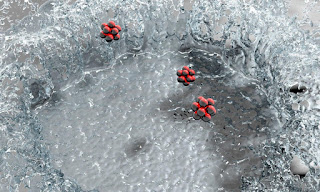
There are developed star-looking nanomachines that are meant to slip in cells and turn them into liquid. Those kinds of systems are extremely dangerous in the wrong hands. The effect of nanomachine is not chemical. That means the nanomachine would not wear off. And a single nanomachine can turn a human into a liquid. 


https://www.news-medical.net/news/20190919/DNA-origami-creating-DNA-based-nanomachines.aspx


https://phys.org/news/2022-01-chemists-dna-world-tiniest-antenna.html


Image: https://www.news-medical.net/news/20190919/DNA-origami-creating-DNA-based-nanomachines.aspx


https://thoughtandmachines.blogspot.com/

Sunday, January 9, 2022

Nanomachines as cutters. (Liquid robots part II)


The half-moon-looking robots can cut molecules into pieces. Those molecular-size robots can hang from the surface tension of water and other liquids. Then the swinging motion of those robots would make them useful to use as the cutters that cut the molecules in pieces.

When the nanomachine swirls. The form of it would make it possible. That the other side of the machine will go through the surface. The requirement for cutting molecules by nanomachine is it will go through the molecule. Or there is some enzyme the cuts the targeted molecule. In the cases that we want to clean water by using nanomachines, they should build a large number. 

If a single nanomachine cannot make that thing. There is the possibility to put molecule sticks between two nanomachines. The swirling nanomachine can cut the molecules. Those are on the surface of the liquid. There is the possibility to make small scissors by using similar structures. 

In those scissors, the other side would be this type of nanomachine. And the other side would be stable. That thing is useful for moving other molecules. But if there is a molecule that will hover extremely close to the surface of water that makes this kind of nanomachine is useful to cut the oil molecules. And if those small scissors can react to things like electricity. They can use to fix single cells. 


The snowflakes as the form of nanomachines


The form of nanomachine is important. If we want to make nanomachines that are moving on the layer we can make the star or snowflake-looking molecule there are opposite polar ions or rather saying ions and anions at the end of corners. Those nanomachines can move on the layer. When the electric polarity of the layer will change. That thing will push anion upward and ion downward. This effect will make those nanomachines roll on the layer. If the nanomachines can operate at a temperature that is below zero degrees celsius. Snowflakes can use as nanomachines. But if the operating temperature of the machines is higher. 

The DNA can use control the growth of those crystals. That means that the form of those snowflakes can store in the DNA. And that thing automatizes the production of those systems. 

This system requires some other material. And that star-looking nanomachine can be made by using carbon chains. If we want to clean large water areas by using this type of nanotechnology. We can pull a magnetic layer below the surface and those nanomachines can cut the molecules on the surface. 

Some nanomachines are like coil springs. The simplest model of the coil springs molecule that can move is the long molecule. There are ionic materials on both sides. 

Another material is an anion. And another is an ion. When the polarity of the layer changes it pulls the nanomachine up. There could be a laser or some kind of (electro)magnetic ray that can turn the nanomachine around while it jumps. And then it should drop to the layer opposite way.  

Cutting molecules by using those tools is an impressive thing. But if we want to be accurate there is needed some other structures. The running nanomachines can connect with those swirling nanomachines.  In that case when the layer where nanomachine stands are going farther. The internal electromagnetic interaction of the nanomachine pulls the molecule shorter.

Normally the same effect is made by adjusting the electricity on the layer. The researchers can make running nanomachines by connecting ions with coil spring-looking structures. When the polarity of electricity changes that will kick those ions up. 

The ions in that structure have different polarities. They are ion and anion. In that case when the other ion jumps up. The other will go down. That thing makes those robots run on the layer. That kind of robot can cut long molecules like DNA. Or some carbon chains. And they are useful tools for many purposes. 


Saturday, January 8, 2022

The small liquid robots can run as long they have "food".

 The small liquid robots can run as long they have "food".


Image 1:

The liquid nanomachines that can operate without electricity might be connected with microchips. Those microchips can equip with a small mustache. That it can use to control the direction where that small nanomachine should go. The microchip can get electricity from outcoming radiowaves. Or they can get energy from the rolling nanomachine itself. Which turned into a nano-generator. 

The new liquid nano-size robots can be fascinating tools. The first aqueous robots that can move in liquid are under research. The tiny robots can walk on the surface of the water. Or which can visit below the surface and then return are tools that are giving a great improvement in nanotechnology. 

But if researchers are creating the nano rolls. That rolls on the surface of the water that tool will have possibilities that have never been before. Those nano-rolls could use as nano-size generators for nanotechnical microchips. The ability to connect the robots. That can move without electricity to the electric production. That kind of thing has a great future in the world of nanotechnology. 


Image: 2


The superconducting layer makes it possible to create helium-based nanomachines that are hovering above the superconducting layer. 

The nano-rolls or nanomachines can hover above the layer by benefiting the electron pillar. When a nano-size machine is put near the superconducting layer. The electrons would start to travel between that object and the layer. If the electrons of the layer and the nano-object are towards each other. T hat effect makes the nano-structure hover above the layer. 

The helium nano-crystals or nano-droplets can use as nanomachines. Those atom-sized machines can move objects above the superconducting layers. 

The system can use the same tunneling effect. That a scanning tunneling microscope uses. That nano-crystal can hang in a physical stylus or an electromagnetic field. 

Those helium or some other atom-based nanomachines are like small UFOs. The helium is suitable for that work because the atom has a corner that can position the layer. The molecule or atom should be like a small pyramid that is upside down. 

Then the nanomachines would rise to hover above the extremely cold superconducting layer by using quantum tunneling. A machine that size is about one or two atoms. Would hover on the top of the quantum pilar. That is formed by the same effect that is used in a scanning tunneling microscope. The atom can hang in a stylus or electromagnetic field. 

Then the operator can move those nanomachines by shooting them with a laser. Or that person can control the location of the nanomachine by using a maser or coherent radio or microwaves. Those hovering nanomachines can move other atoms over the layer. 


https://scitechdaily.com/helium-bath-splash-physicists-discover-surprising-phenomenon/


https://scitechdaily.com/these-tiny-liquid-robots-never-run-out-of-energy-as-long-as-they-have-food/


Image1) https://scitechdaily.com/these-tiny-liquid-robots-never-run-out-of-energy-as-long-as-they-have-food/


Image 2) https://scitechdaily.com/helium-bath-splash-physicists-discover-surprising-phenomenon/


Saturday, January 1, 2022

Next-generation nanotechnology can be independent-operating molecule-sized robots.


 Next-generation nanotechnology can be independent-operating molecule-sized robots.


"A DNAzyme (red) uses its binding arms to dock at a specific location on an RNA strand (yellow) and then cleaves it at its core. High-resolution, real-time NMR, Electron Paramagnetic Resonance, and Fluorescence Spectroscopy."

"As well as Molecular Dynamics Simulations are used to identify the structure. And catalytic mechanisms of the DNAzyme. Credit: HHU/Manuel Etzkorn" (https://scitechdaily.com/dnazymes-how-active-dna-biocatalysts-that-destroy-unwanted-rna-molecules-work/)


The active DNA catalysts are the gate to DNA-controlled, independently-operating, molecular-size nanomachines. 


The DNAzymes or active DNA biocatalysts are next-generation tools for destroying unwanted RNA. The DNA molecule is one of the tools. That can use for controlling molecular-size machines. DNA is like a chemical computer program. And if the researchers can make synthetic DNA that can make exactly what they want they have the ultimate tool for making genetically engineered cells. 

Those synthetic DNA bites can use to make cells immune against AIDS. And also the DNA-controlled enzymes can use to destroy dangerous viruses in the blood and tissues. DNA-controlled enzymes are the new and powerful solution of nanotechnology. The thing is that those enzymes can program to make many things that are making the medical more effective than ever before. 

The use of DNA-controlled enzymes can make it possible to remove the virus genomes from the cells that are already infected. The same enzymes can carry the ricin molecules in the cancer cells. But the problem is that the DNA-controlled enzymes are just under development. 

The DNAzymes can also be used to carry the small pieces of metal or some other material to the cells. And then that thing would make resonate by using EM-radiation. The thing is that intelligent enzymes can use to destroy things like poisons. That means this type of technology can use to destroy things like nerve gases and other chemical weapons. This is the reason why this kind of research is interesting for the military as well as civilians. 

The DNA-controlled molecules can clean water. They can destroy the oil and other things like explosives from the ground. The artificial DNA molecules can use to make very independently operating molecular-size nanomachines. 

The DNA-controlled and radio wave-activated enzymes are next-generation Bellefon and Khaimara in one package. In the wrong hands, those kinds of tools are making legendary and horrifying Novichok-chemical seem like some kind of candy. That technology can use to create weapons that are more horrifying than ever before. 

But the same way those new intelligent chemicals are making it possible to save the life of people. The DNA-controlled nanorobots can clean the body from chemicals. And they can also make it possible to destroy things like cancer from areas where it is impossible to destroy. 


https://scitechdaily.com/dnazymes-how-active-dna-biocatalysts-that-destroy-unwanted-rna-molecules-work/


Image:https://scitechdaily.com/dnazymes-how-active-dna-biocatalysts-that-destroy-unwanted-rna-molecules-work/


https://networkedinternet.blogspot.com/

Sunday, September 2, 2018

Nanomachines and the visions about them


Picture I

https://travellingintimeandspace.wordpress.com/

Kimmo Huosionmaa

Nanotechnology and its solutions can make possible to create the liquid robot, what can hide inside the human body, and when those extremely small robots get the order. They can come to the skin for protecting that individual. Those robots can have the same size as droplets, and they could observe the function in the nervous system. So they could communicate with brains without any microchips and those systems could be real in the decade.


When we are thinking about the shape of that machine, those little robots can replace the immune system in some cases, but in theory, that thing can be the key to the new kind of bulletproof vests, where the nanotechnology would come out of the body when the person, when the person is under the attack, and because those active nanomachines could give the counterpunch, when something hits them, would only the little layer of those nanomachines make entire person bulletproof. And they can also protect a person from dropping stones and other dangers.


The nanorobots and intelligent very small size sensors would make possible to communicate with that liquid shape machine. And control it by using only brains. Those machines might have various sensors, and they would communicate together. Each one silicon droplet is actually an independent robot, and they might have only one sensor in each one. Those sensors allow the group of those machines to smell the neurotransmitters and electric functions, and in theory, that kind of machines can communicate interactively with the nervous system, what makes those small robots extremely fascinating.


They can act as the giant macrophages, and keep person clean from the bacteria and viruses. And in the most notorious imaginations, those robots could make the thing, what looks like some tongue of gecko, and that could defend the person against any attacker. This is only the visions, what makes nanotechnology so fascinating and terrifying. But maybe in the future, this can be a reality in the everyday life.

Picture I

https://i.pinimg.com/originals/33/74/11/337411eecdd71fcee319bc12c27e6b56.jpg

Fifth force and gravitational recoil.

There are suggestions that the Standard Model is wrong. That doesn’t mean that we must rewrite the entire model. We should search for the mi...