Showing posts with label algorithms. Show all posts

Wednesday, August 23, 2023

New types of simulations are used to develop neural networks.

 New types of simulations are used to develop neural networks.


Researchers can use computer games to create accurate models of brainwaves in certain situations.


Researchers "borrow" game algorithms for analyzing molecular interactions.


Researchers used combat game algorithms to simulate molecular algorithms. That kind of thing opens new perspectives for predicting molecular interactions. The ability to follow molecular behavior and then connect certain algorithms to certain data storage makes it possible to make algorithms that predict molecular interactions.

In this version, the system takes images of molecular interactions, and then the AI selects algorithms that have the best match for certain interaction series. And that thing allows us to create algorithms that simulate interactions in certain chemical and physiological environments. In certain chemical and physical environments, similar molecules are always interacting similarly. If some molecules interact differently, that means there is some anomaly in their environment.
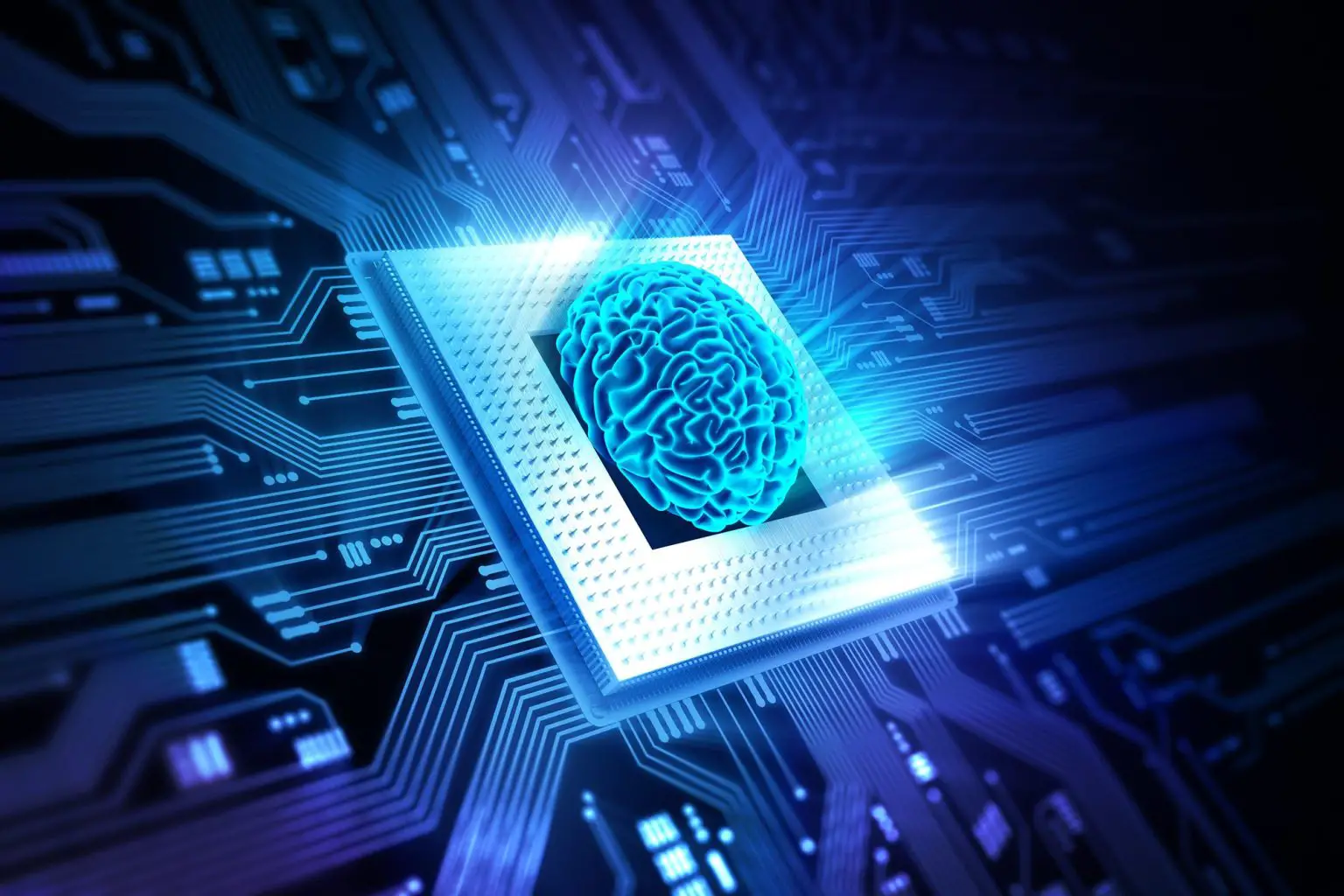


"Researchers have utilized combat video game algorithms to analyze molecules’ movement within brain cells, a method previously used to track bullets. This innovative approach has shed light on brain cell activity, paving the way for advancements in neuroscience research." (ScitechDaily.com/Video Games Spark Exciting “New Frontier in Neuroscience”)

AI and augmented reality are things that can prepare people for multiple situations, from everyday social meetings and car driving to complicated surgery and military situations.

AI, virtual reality, and augmented reality are tools that can be used to research brain signals. That technology can be used to make "false memories" or give people new skills for many things, from everyday actions and threats to military-intensive technology. We don't even know what kind of things AI and augmented reality can do.

We know that military intelligence can give pre-experience in combat situations and make troops train in artificially modeled operational areas. Those things allow troops to handle situations better. But that kind of synthetic experience can make it possible to increase surgeons' and car drivers' abilities to prepare better for their first surgery or driving experience.

Augmented reality makes it possible to analyze brain waves in certain situations. And that helps to make systems that can read the mind. Those systems could project thoughts and imagination onto the computer screen.


The next-generation AI-based neural networks use similar structures to the human nervous system.


1) The binary layer is responsible for reflexes. The reflex is a pack of preprocessed data. The preprocessed data pack that fits a certain situation activates a certain reflex, which can be a tape record or movement series.

2) Quantum CPU (central processing unit) that creates the new action models for reflex systems When binary systems cannot respond for some reason, the quantum CPU makes that response and interconnects the data stored in the system.

We know many more things about brains and their ways of operating. The next-generation intelligent neural networks handle information more like brains than traditional binary computers. The next-generation neural networks are tools that handle information in a multi-layer architecture.

The binary systems that control sensors are like reflex systems. They give fast but limited responses to situations that sensors see. But when a system requires complex analysis and deliberation, that system uses the Quantum computer to find those solutions.


https://scitechdaily.com/video-games-spark-exciting-new-frontier-in-neuroscience/

https://technologyandfuture4.wordpress.com/2023/08/23/new-types-of-simulations-are-used-to-develop-neural-networks/

The new algorithm can calculate qubits very accurately.

 The new algorithm can calculate qubits very accurately.


But this algorithm and formulas can used in many other tools, like quantum chemistry and quantum engineering.


A new algorithm can calculate qubits very accurately. Accurately calculated qubits are necessary tools for quantum computing. In that kind of calculation, the focus is on how to predict the levels or states of superposition of the qubit. When we think of superpositions, they are like potholes or dents on the qubit, which can be a photon or an electron. Or those potholes and dents are weaker points on the quantum field. There can also be stronger areas in those quantum fields. Those stronger areas are like mountains or hills.

But the same algorithm can make a revolution, at least in quantum chemistry. That new algorithm can be used to calculate the depth of those potholes or the height of those hills. And in quantum chemistry, those potholes and hills are places where things like electrons connect each other. That means the same thing that makes qubits can be used to connect subatomic particles.

The term quantum chemistry means that molecular interactions are handled using quantum theories. And this new algorithm can make it possible to calculate Van Der Waals bonds. But we could also use the term "quantum chemistry" for things where researchers interconnect subatomic particles together. That allows you to create electron layers or some other things.


"Scientists have developed the ACE algorithm to study qubit interactions and changes in their quantum state, simplifying quantum dynamics computation and paving the way for advancements in quantum computing and telephony". (ScitechDaily.com/Deciphering Quantum Complexity: A Pioneering Algorithm for Accurate Qubit Calculation)


Wikipedia determines quantum chemistry like this:

"Quantum chemistry, also called molecular quantum mechanics, is a branch of physical chemistry focused on the application of quantum mechanics to chemical systems, particularly towards the quantum-mechanical calculation of electronic contributions to the physical and chemical properties of molecules, materials, and solutions at the atomic level". (or atomic and subatomic levels) (Wipedia.com/Quantum Chemistry).


Artificial demon particle.


Quantum chemistry is a new tool for quantum systems. The idea is that. The stronger and weaker points in the quantum fields can used to connect electrons or protons in a quasiparticle called the demon particle. The demon particle is the electron layer or electron ball that covers the layer.

Using magnetic fields, it is possible to create some kind of electron particle layer, or electron ball, between graphene layers or graphene-titanium layers. The problem is this: That kind of system requires extremely strong magnetic fields. In the last one, the electrons hover between graphene and titanium (or some other metal) layers.

But if electrons can anchor themselves to each other by using those quantum hills and potholes, that decreases the need to use high-power magnets. If we want to make energy waves that are strong enough to levitate large structures, researchers need a thick electron layer.


https://scitechdaily.com/deciphering-quantum-complexity-a-pioneering-algorithm-for-accurate-qubit-calculation/


https://scitechdaily.com/quantum-superchemistry-breakthrough-a-pioneering-discovery-by-university-of-chicago-scientists/


https://www.space.com/bizarre-demon-particle-found-inside-superconductor-could-help-unlock-a-holy-grail-of-physics


https://miraclesofthequantumworld.blogspot.com/2023/08/the-demon-particle-is-found-inside.html


https://en.wikipedia.org/wiki/Quantum_chemistry


https://technologyandfuture4.wordpress.com/2023/08/23/the-new-algorithm-can-calculate-qubits-very-accurately/

Wednesday, January 5, 2022

And then the dawn of machine learning.


 And then the dawn of machine learning.

Image: Pinterest


Machine learning or autonomously learning machines are the newest and the most effective versions of artificial intelligence. Machine learning means that the machine can autonomously increase the data mass, sort the data and make connections between databases. That ability is making machine learning someway unpredictable. And that kind of thing makes the robot multi-use systems that can do the same things as humans. 

The reflex robot is a very fast-reacting machine. The limited operational field guarantees. that there is not needed a very large number of databases. And that means the system must not search the right database very often. That makes it very fast. But if it goes out from its field it will be helpless. 

When we are thinking of robots that can make only one thing like playing tennis they can react very fast in every situation. That is connected with tennis. There is a limited number of databases. And that means the robot is acting very fast. 

When a robot or AI makes the decision it systematically searches every single database. And if there are matching details to observed action. That activates the database or command series that is stored in the database. But the thing that makes this type of computer program very complicated is that when the number of stored actions is increased the system will slow.  

If we want to make a robot that can make multiple actions. That thing requires multiple databases. And searching for the match for the situation in every database takes a certain time. So complicated actions require complicated database structures. Compiling complex databases takes time because there are limits in every computer. And in the case of a street operating robot, the system compiles data that its sensors are transmitting to its computers. 

So the conditions that this kind of system must handle might involve unexpected variables like fog or rain. And for those cases, the system needs fuzzy logic for solving problems. In that case, only the frames of the cases are stored in databases by the system creators. And that system is compiling those frames with the data sent from the sensors. 


The waiter robot can be used, as an example of machine learning.


A good example of a learning machine is the waiter robot that is learning the customer's wishes. The robot will store the face of the customer to its memory. When it asks does the customer wants coffee or tea? Then the robot will ask "anything else". And in that case, the robot can introduce the menu. 

And then the customer can make an order. There are certain parameters in the algorithm. Those are stored in the waiter-robots memory. The robot is of course storing that data in the database. The reason for that is simple. The crew requires that information that they can make the right things for the customer. But that data can use to calculate also how many items the average customer makes after a question "anything else"? 

The robot can also store the face in the database that it can calculate how often that person visits the cafeteria. Then that robot can simply store the orders below the customer's face. And it learns how often a person orders something. If some customer is ordering some certain products always. The robot can send the pre-order to the kitchen. That they can get a certain type of order. When some customers will visit often and order all the time same thing, the robot can start to say "do you want the same as usual? For that thing the system requires parameters how often in a certain time is "often"? That was an example of the learning system. 


https://thoughtandmachines.blogspot.com/

Gluons and the strong nuclear interaction.

When we think about energy flow from the strongest to the weakest. Free energy. That causes an atom’s decay. It is formed. Or. Released in t...