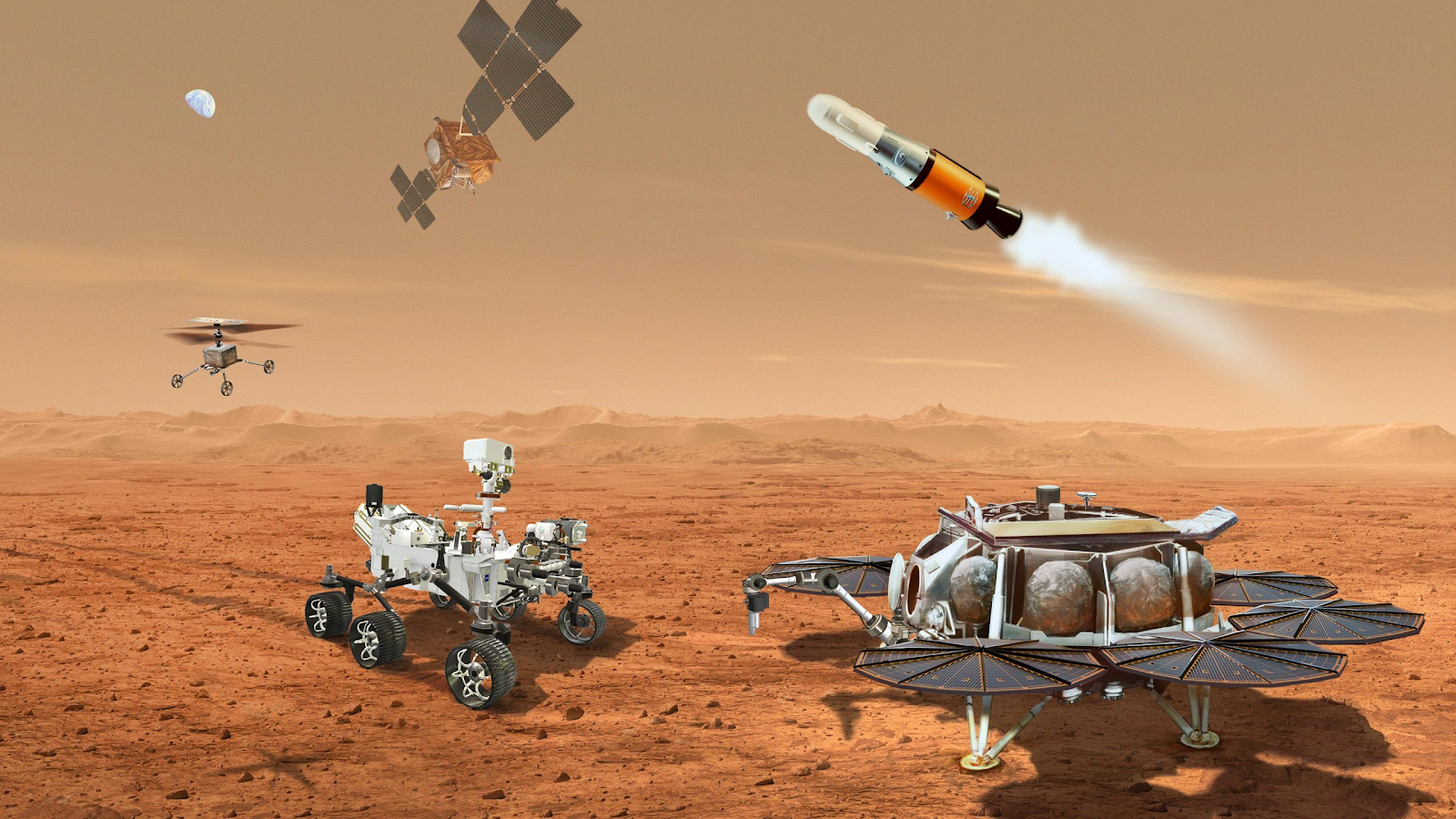
The buried lake of Mars could just be layers of ice and rock. But maybe the astronauts can benefit from that ice. If that ice is water astronauts can use it simply by melting it. And if we are thinking about the Mars colony or Mars base, we must realize that it's safer for that colony that Mars has no living organisms.
And then we must realize one thing. Water and life are not synonyms. Water doesn't automatically mean that there are alien lifeforms. And fossils of bacteria are not mean that there are some living creatures on that planet. And living bacteria don't mean that there are intelligent organisms.
Well, the existence of water and liquid water are different things. There could be lots of water on Mars, but that water could be crystallized form in minerals like sulfates. It's possible to separate that water by warming those minerals. And sometimes pupils are making this kind of experiment in a chemistry course. But is there liquid water on Mars? That is a different thing.
Today planet Mars is a very cold place. There is only weak volcanic activity. There is could be carbon dioxide ice under the surface. And if there is some kind of extra energy in those carbon dioxide ice pockets that can cause carbon dioxide vaporization.
Also, giant dust storms are traveling across the desert. So there is a possibility that some kind of meteor impact or friction in sandstorms can rise the temperature in some places and form something liquid. But is that liquid thing some kind of carbon dioxide?
Because of low pressure in the atmosphere, there is vaporized water in Mars' atmosphere. There is the possibility that there was some kind of life forms. But that doesn't mean the bacteria are living. There is the possibility that those bacteria are stoned or turned into fossils that involve things like methane gas.
Methane gas found on Red Planet. There is suspicion that microscopic bacteria formed that. That doesn't mean that there are active bacteria on Mars. Even if bacteria formed that methane, it could be stored in the mineral pockets or the bacteria fossils millions of years ago.
So maybe that methane is the remnant of the lost lifeforms. Maybe that methane was stored in bacteria millions of years ago. And those fossils kept that gas inside them until NASA's probes released that gas.
In history, the planet Mars was a suitable place for the birth of life. But then its climate changed. That planet lost its entire lithosphere at least twice. And some asteroid impact changed its trajectory. The question is how far has life advanced on that planet?
There is suspicion that there was some kind of bacteria on that planet before its climate changed. It's possible, that researchers can find remnants of those ancient bacteria.
But if there are remnants of those bacteria only in a few places on the surface. That tells that some kind of meteorites brought those lifeforms to the Red Planet. When we see Mars in modern images we see the remnants of ancient rivers and seas. But where that water that created those ancient rivers was gone?
Of course, the UV radiation from the sun can destroy water molecules. But there is no UV radiation in all places on Mars. Those ancient rivers formed after the last big catastrophe. That means Mars already lost lots of its mass and maybe its magnetic field turned weak. And there was still water in a short period after the last big impact. Was something vaporized in that water after the last big impact?
Was some kind of radiation impact vaporized water? Was Mars hit by FRB (Fast Radio Burst) that raised the planet's temperature? Or could the UV radiation be so powerful that it broke all water molecules on that planet?
The question is where has the water gone? And why that thing that vaporized water didn't destroy those ancient riverbeds?
What raised the temperature on the entire planet without harming the geological structures of ancient rivers? If that thing was some kind of meteorite. Ancient riverbed geological structures should be destroyed during that impact. So, could there be some kind of meteorite rain? In that version, the small ice bites of carbon dioxide or methane ice impacted the atmosphere of the Red Planet. And that raised the temperature that vaporized water.
https://scitechdaily.com/signs-of-water-on-mars-might-actually-be-an-indication-of-something-else/
https://en.wikipedia.org/wiki/Mars
Image: https://scitechdaily.com/signs-of-water-on-mars-might-actually-be-an-indication-of-something-else/
https://artificialintelligenceandindividuals.blogspot.com/