Thursday, August 3, 2023

Information is one energy form.


There is a strange phenomenon where electrons vanish when they are cooled. The reason for that quantum phenomenon is that when electrons are cooling energy starts to travel in them. That energy falls in the middle of electrons. And then it reflects on their shell. The direction of energy flow depends on the energy level of the environment. 

If an electron's energy level decreases very fast. That thing can turn it into wave movement because of that reflecting wave. When that wave reflects from an electron. That reflection makes around that electron a short-term electromagnetic vacuum.  This quantum vacuum rips electrons into pieces if it exists long enough. 

The ultra-short and high-power energy impulse can break electrons. When energy rises very fast in electrons and then it decreases very fast, that effect rips electrons into pieces. Or turn them into wave movement. That makes it possible to make a conclusion that ultra-powerful, short-term energy impulses can also turn all other elementary particles into wave movement. 


"Artist's view of a quasiparticle composed of localized and mobile electrons, here broken up by an ultrashort light pulse. Credit: University of Bonn" (Phys.org)

If an electron's energy level is lower than the environment energy travels in it. And oppositely, if the electron's energy level is higher than its environment it sends energy or wave movement.  When an electron receives energy and the energy level around it decreases all the time electron transmits energy out from it. All the time, when energy travels out from an electron it loses its mass. That thing causes an effect that turns electrons into wave movement. 

All fundamental interactions are wave movements. And the size of interacting objects determines the distance of interaction. The reason why as an example weak nuclear force cannot interact in a long distance is that. The weak nuclear force is wave movement that an atom's nuclei send from the structure between the neutron's N/S poles. 

The atom's nuclei send radiation from very thin areas or strings. Manly those strings or channels where Z and W bosons move are between the neutron's poles. And that radiation must travel through the electron shells. And that means it's quite hard to detect that radiation from long distances. 

Why neutron star has a stronger gravitational field than Earth? The answer is that the neutron star's material is packed in an extremely dense form. Or we can say that the reason for that is that a neutron star is a homogenous object there is only one form of particles. Those particles are neutrons. Because in a neutron star is only neutrons. Those particles spin synchronously. Neutrons act like rolls. They transport quantum fields inside neutron stars. 

That thing forms a gravitational pulling effect that moves objects inside the gravitational centers. The effect is similar to the electromagnetic pulling effect between magnetic N and S poles. All fundamental forces are interactions. And they all are similar forces. But the reason why gravitational force is weaker is that the interaction happens between much smaller particles than in electromagnetic interaction. 

In a black hole, the spinning particles could be the gravitons. Those particles pull the quantum fields inside or through that object. And during that process, they send radiation that waves have the same wavelength or size as a particle that sends that radiation. So they just transform energy stored in material into another form. 

So black holes and all other objects in the universe are not forming energy. They just turn one energy type or fundamental interaction into another form. All fundamental interactions are wave movement or one form of energy. And that means nuclear reactions are also not forming energy. They release energy that is stored in materials. 

Can gravity remember? The fact is gravity is one wave movement form. Researchers try to create light-based optical USB sticks where information is stored in the laser ray, that travels between 100% reflecting mirrors. We can store information in laser rays. and that ability is used in everyday data transmissions. So why cannot we store information in gravitational waves? That thing requires an ability to interact and manipulate gravitational waves like researchers manipulate light and radiowaves in communication. 

That means gravity should have the ability to store information. As well as all other wave movement frequencies can store information. So nothing denies the possibility that gravitational waves can someday act like laser rays and transport information through the universe. Because things like gamma rays and all other wave movement types can transport information gravitation should have the same ability. 

And the ability to transport information means the ability to store information. Because without this ability, actors like particle or wave movement cannot transport information. If an actor "wants" to transport information it must store it first. 


https://phys.org/news/2023-07-electrons-slowly-cooling-effect-unique.html

https://scitechdaily.com/unprecedented-precision-physicists-measure-the-wave-like-vibration-of-atomic-nuclei/

The new four-dimensional material can be a breakthrough in the research of the fourth dimension.


The fourth dimension is the thing that is extremely hard to detect and research. The reason for that could be the energy level of the fourth dimension is so high that particles send non-stop radiation. The size of those particles would be so small, that they send so small-size waves with very high frequency that we cannot see that radiation. 

High-energy particles are far smaller than low-energy particles. They send radiation pulses always when their energy level is higher than their environment. The reason why we can see particles is that there is a pause in radiation transmissions. 

During that pause, the receiving particles remove the extra energy that they get. In the form of wave movement. So the pause of that radiation stress is the thing, that makes the object visible. The high-energy particle sends radiation so often that the difference in energy levels in receiving particles doesn't change much. Because energy waves from those small-size particles are coming very often the change in the energy level of receiving particles is not very strong. 


"Scientists at the University of Missouri have created a synthetic 4D metamaterial that can control energy waves on solid surfaces, potentially leading to advancements in quantum mechanics, quantum computing, and earthquake mitigation". ScitechDaily/Fourth Dimension Breakthrough: New Metamaterial Controls Energy Waves)


Is the fourth dimension the source of dark energy? 

And because energy stress happens very often, the receiving particle has no time to remove that extra energy and that particle sends weaker wave movement. So when we think about the fourth dimension the energy level of those particles can be so high, that they send radiation into the 3D universe without breaks. 

Because there is no break in the radiation stress. The receiving particles have no time to remove extra energy. So the particle's energy level turns to the same level as the radiation that hits the particle. That thing causes an effect where a standing wave around the particle isolates it from that radiation. In this model, the 4D material is the source of dark energy. 

Researchers made the 4D material. In that material, there is some high energy component like the magnetic field that is anchored on the material. Then researchers follow how that energy field interacts with other energy fields. The new 4D material can create interaction between 4D and 3D worlds. The new metamaterials can create and conduct energy fields. 

Or other ways. we can say that those metamaterials are not forming energy. They just adjust the wavelength of energy levels. And that thing is very important if the 3D material wants to touch the 4D Particles. 

https://scitechdaily.com/fourth-dimension-breakthrough-new-metamaterial-controls-energy-waves/?expand_article=1                                                                                                                                                          

The nanotechnology with LK-99 is the ultimate combination for power supply.


The chemical method to benefit rain is to put zink and copper electrodes in the salt. Then that saucer filled with water. Electrons start to travel from zink to copper. This system's voltage depends on the positions of metals in the voltage series used in that battery. Zink and gold give more electricity than zink and iron. The reason for that is simple. Zink delivers electrons stronger if the cathode is gold. 

Maybe that kind of electric battery is not very powerful. But if the salt water will conduct between two layers, connected with the superconductor. That makes the revolution in the research of non-nuclear submarines. The zink and gold layers can be internally in the hull of those submarines. And the LK-99 can minimize the loss of electricity. 

In some visions, the laser ray that jumps between 100 % reflecting mirrors can be the next-generation power supply system. The laser ray that jumps between mirrors harvests energy from wave movement that impacts it. Then the system that uses a superconducting electric circuit can give electricity to nano-size components.  

But nanotechnology can make a new type of energy supply. When we think that the mechanic nanogenerators. Along with LK-99 superconductor nano-and quantum technology can make breakthroughs in the next generation energy supply. 

If some layers cover with nanorods, connected with nano-size generators. Those systems can make breakthroughs in energy production. At least in some kind of intelligent textiles. Things, like cellulose fibers or yarn fibers can use as nanorods in the nanogenerators. If those systems are connected with the LK-99 superconductor. That minimizes the loss of energy because of resistance. 


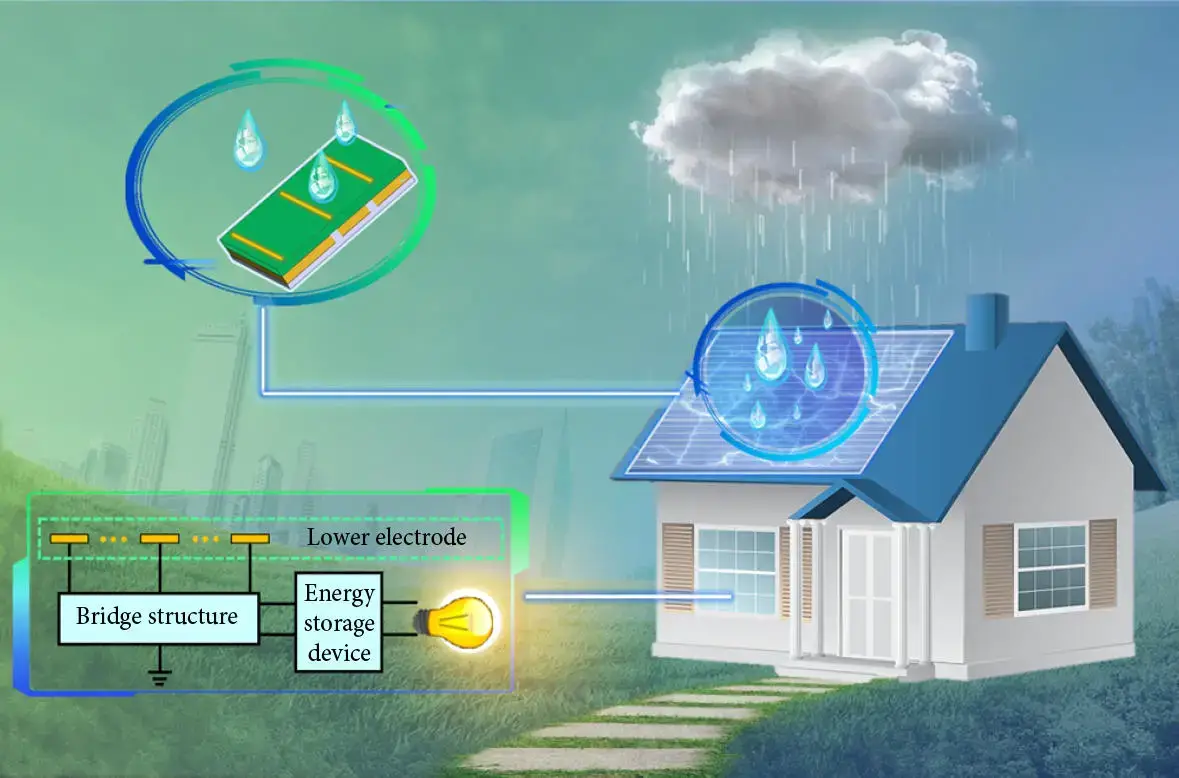
The quantum system that can harvest energy from droplets is one of the tools that can revolutionize energy production. Chinese specialists created a two-layer nanomaterial. That can turn kinetic energy from water droplets into electricity. There are many ways to turn kinetic energy into electricity. In some versions, the quantum pillars between 2D materials can harvest kinetic energy. 

The idea is that when something hits the 2D material layer that layer transmits energy to those quantum pillars where things like excitons are locked between those layers. When the droplet or something like that impacts the layer, it transfers this energy into the excitons that are transferring that extra energy into the layer that is below it. 

"This diagram shows what these D-TENG panels might look like. It also illustrates how the bridge structure, when combined with the lower electrodes, can lead to improved energy storage. Credit: iEnergy, Tsinghua University Press". (ScitechDaily.com/Triboelectric Nanogenerator – New Technology Successfully Harvests Electricity From Raindrops)


Could nanotechnology make a situation where the submarine or aircraft can harvest as much or even more energy than it uses? Maybe the most modern nanotechnical mill-generators connected with the LK-99 superconductor make it possible for that submarine can harvest more energy than it uses. In that model, the system connects multiple energy sources like photo voltaic cells, solar panels, and nano windmills. 

In some other versions, the nanotechnical water mills harvest energy from air or water. That kind of system can be more conventional than some quantum systems. The idea is that.  The mill generators cover aircraft's or submarine's shells. That allows them to harvest some energy from water or air. That system might not seem very powerful. 

But if that kind of system is connected with superconductors and submarines or aircraft's electric systems transformed into superconducting. That allows it can minimize the use of nuclear reactors. The superconducting systems also can harvest energy from nuclear reactor's beta radiation. That increases its efficiency. 

Those nano-size mills can install on any layer. And they can give electricity to ships and aircraft. The nanotechnical windmills can also give the ability to make the layers that are rotating structures. All rotating structures making possible to create nano-size generators. Those wind-water mills can connect with the nanotubes that conduct water or air to those systems. 


https://phys.org/news/2023-07-viral-room-temperature-superconductor-excitementand-skepticism.html

Wednesday, August 2, 2023

Researchers created real-life freeze beams for USAF.


Freeze beams are not full-scale science fiction. The idea of those systems is "stolen" from SciFi movies. In real life, this technology might not be suitable for weapon use. But it can use for low-temperature electronics. The weaponized version could be the low-temperature ions that are shot against a target. That loaded with opposite electricity. If the system uses ions the target must load with positive electric load. That allows those ions to impact with it. 

Real-life freeze beam uses plasma or anions and ions whose temperature is very low. Plasma is an ionized gas that can consist of ions that are positive particles. Or anions that are negative ions. The plasma has similar temperatures as neutral gas. And freeze beam is low-energy plasma. If the only wanted effect is the freezing the system must neutralize those ions and anions. In that process, the ions will turn back to neutral gas. 

The ion cannon shoots that low-energy plasma whose temperature is very low against the target. The system can use anti-ionization for turning those ions or anions back to neutral atoms when they travel through the nozzle of the ion cannon. 


"Professor Patrick Hopkins of the University of Virginia is developing a freeze-ray device to cool electronics in spacecraft and high-altitude jets. The technology is based on plasma, which surprisingly cools surfaces before heating them. With a $750,000 grant from the U.S. Air Force, the team is exploring ways to amplify and prolong this cooling effect. (Artist’s concept.)" (ScitechDaily.com/Chilling Breakthrough: The Science Behind a Real-Life “Freeze Ray” Technology for the Air Force)

The system can shoot anions and ions by using internal accelerators. And that thing will remove an electric load of the plasma. The system must neutralize those ions and anions before they impact the targets. Or they will send electrons to the layer. Or remove electrons from the layer. 

Or the system can shoot ions through the electron cloud. And another version is that the system uses some electronegative material like protons that remove extra electrons from anions. So the freeze beam is the beam of an extremely low-temperature gas. The only problem with those systems is that they require neutralizers. 

The use of a freeze beam can have mainly other use than as a weapon. The extremely thin low-temperature gas beams can use to keep microchip temperature low. Or freeze beam can travel above the electric wire. That can use in the superconducting technology. 

The freeze beam can use to freeze electronics. It is used to make frozen gas around the aircraft or between the aircraft and the observer. If that extremely low-temperature gas hovers above the aircraft. It makes that craft invisible to IR sensors. In this system, the frozen gas will hover above the warmer gas layer. The freeze beam can also lower the temperature of the exhaust gas of the jet engines.

https://scitechdaily.com/chilling-breakthrough-the-science-behind-a-real-life-freeze-ray-technology-for-the-air-force/?expand_article=1&expand_article=1 

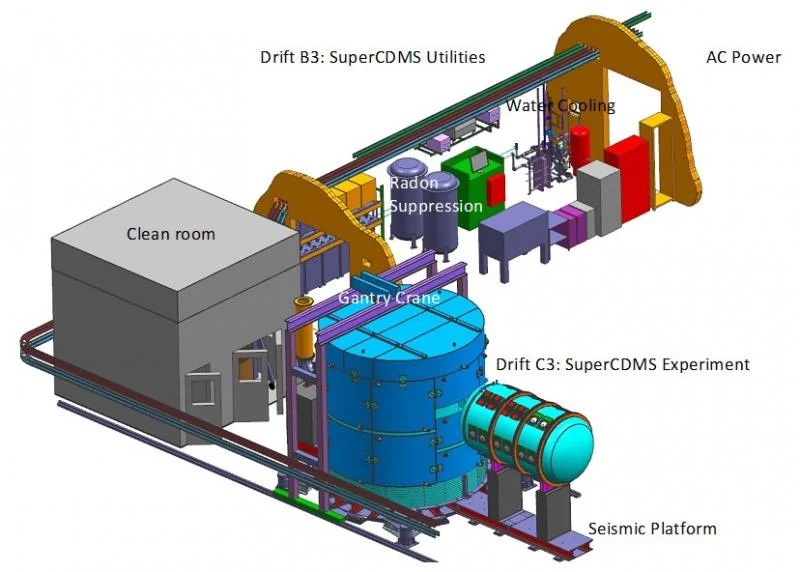
The dark matter researchers fail to create dark matter.


Are neutrinos dark matter? 


Are neutrino stars possible? The thing that makes neutron stars possible is that neutrons have north and south poles. So if neutrinos also have N/S poles. That makes it possible that also neutrino can form similar lattice structures as neutrons form in neutron stars. Neutrino is an elementary particle that is far smaller than a neutron. And if neutrino stars are possible. 

They reflect radiation in a much shorter wavelength than neutron stars. When a particle reflects radiation first it takes it into its quantum field. Then the quantum field's energy level must rise higher than its environment. At that moment, the particle sends wave movement. Those particles' wavelengths are the same as the particle's size. 

The reason why the frequency of small and high-energy particles is shorter is that there is not very much space in those particles. Theoretically, theoretical graviton or dark matter particle is so small, that it transmits all energy back immediately. That thing could form the quantum disk around that particle. 

And that thing could make it possible that radiation travels past those particles. The quantum disk interacts similar way as material disks of neutron stars or black holes. It pushes radiation away from it. But it also makes the quantum-maser emission in the middle of it. 

Nuclear reactors and stars can form neutrinos. The question is are neutrinos in other particles? Or is the thing that forms them the whirl that forms when neutrons or some other particles impact each other? Sometimes so-called sterile neutrinos are introduced as dark matter. Sterile neutrinos are hypothetical neutral or almost neutral particles. In some visions, the neutrino has two poles. And it is quite similar to a neutron that is not an elementary particle. 

The idea of that model is that the difference in the domination of the N/S North and South poles in the elementary particle is the thing that determines if the particle is neutrino or electron. If a particle only has a north pole that thing makes it a lepton called an electron. And if that particle's north and south poles are in balance or they have the same strength. 

That makes the particle neutrino. So if we think that particle slides from the electron state to the neutrino state we might understand why dark matter doesn't react. The polarity of that particle makes it spin extremely fast. Ot its spin turns >1. And that thing turns neutrino act like a drill that pushes quantum fields and superstrings away from it. The fast spin makes an effect where quantum fields cannot touch a very fast rotating particle.


The Dark matter detector. 


If a sterile neutrino is a polar particle that has N/S poles, neutrinos could create similar structures like atoms. So if neutrinos can form lattice structures like neutrons and other polar particles that thing means that in the universe is the neutrino stars. And the question is, can we see those stars? 

The problem in attempts to create dark matter is simple. Dark matter does not interact with electromagnetism. And that makes it invisible. The atom clock is the only real thing that can make observations of dark matter. The only known interaction between dark matter and visible material is gravitation. And the creation of dark matter requires the possibility to create a gravitational maser or laser that shoots gravitational waves as its rays. The gravitational maser can make dark matter. 

But the problem is that nobody knows how to make that thing. We know that a gravitational lens can change even a photon's trajectory. Gravitational lenses are giant galaxies. There is also one thing that can focus gravitational waves. And that thing is the gravitational field. The synthetic gravitational field could make it possible to create dark matter. But then we must realize one thing. We don't know, does the dark matter send, or does it receive gravitational waves. 

In some theories, the spin of dark matter particles is so high, that sends energy in the peaks that can penetrate the visible material. In this model, the extremely powerful spin makes the superstring. That simply pushes other superstrings away from its route. So this mystery ghost material can tunnel itself through the fermions or their bonds. 

Or maybe we think that dark matter particles spin extremely fast and that thing can form a hole in the middle of the particle. The electromagnetic fields fall into that hole. And then they will impact each other in the middle of the particle. That forms a radiation impulse in the equator of that particle. And then that radiation impulse pushes electromagnetic radiation over the particle. 

If we want to make some material that requires the ability to interact and manipulate it. The problem with dark matter is that it cannot interact in other ways than through gravitation. And all our manipulation methods are acoustic or electromagnetic. Electromagnetic radiation or electromagnetic field cannot create dark matter because it cannot interact with that material. 

If we want to stress atoms using lasers. That stress can almost form dark matter. But then just in the energy point where visible material turns to dark matter where it loses its ability to interact with visible material, the radiation loses its touch with those particles. When that touch ends dark matter sends radiation away. And then it cannot turn to dark matter. But this theory is only a hypothesis. We don't know if dark matter is on a higher or lower energy level than visible matter. 

The problem is this. Dark matter is not the same as black holes. It's a similar material as visible. But somehow it cannot interact with electromagnetic windows. The only confirmed interaction between visible and dark matter is gravitational. There is no sign of weak force interaction between dark and visible material. 

Sometimes is asked are WIMPs or Axions the dark matter. The fact is that both of those hypothetical particles can form dark matter. The thing is that we don't know the interactions of things like muons very well. We know that all elementary particles, like muons. And especially neutrinos do not seem to belong in any known structures in the universe. 


https://www.universetoday.com/162629/dark-matter-experiment-fails-to-turn-up-the-mysterious-particle-but-narrows-its-hiding-places/

Tuesday, August 1, 2023

The Rydberg-Moiré exciton can be a big step for compact quantum computer development.

The new superconducting material LK-99 is the ultimate tool. It can use to make new solid qubits. The ability to create room-temperature superconductors means the revolution in the next-generation portable quantum computers. The solid qubit is multiple layers of superconducting materials. And the information is cut to those states like it is cut to other qubits. In solid qubits, the system makes the superpositions and quantum entanglements in solid material. 

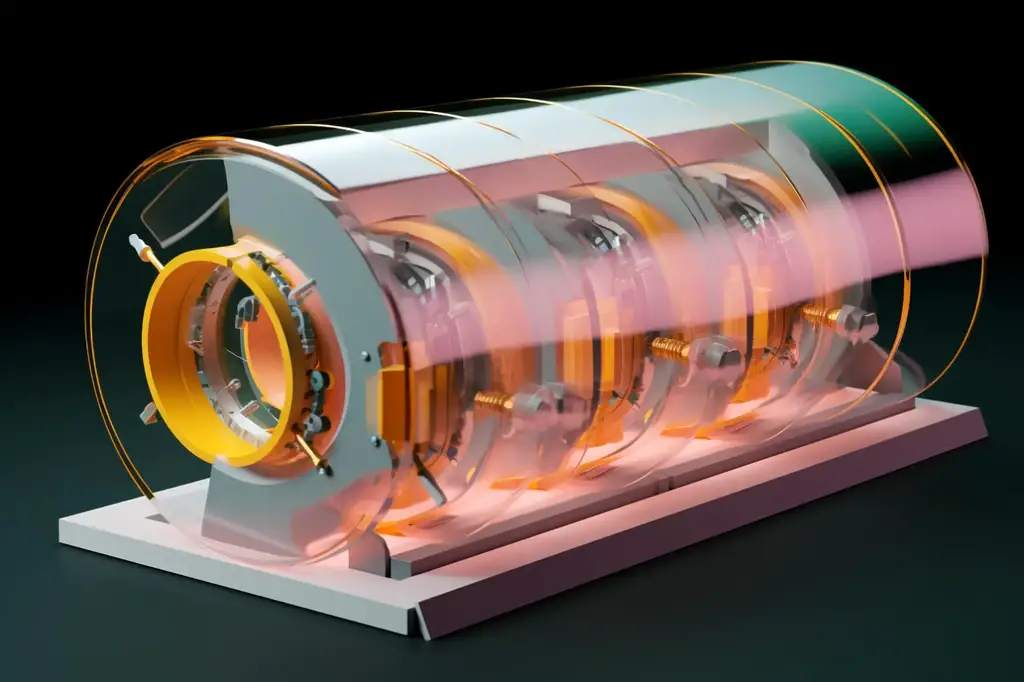
The image portrays Rydberg-Moiré's excitons. Those excitons are like pillars between those layers. The system can use those excitons for transport information. between layers in a solid qubit. The idea is that the system drives information one by one to all layers. If there are diodes or cutters (switches) between those states the system can drive information first to the entire system. Then it can cut information route to the most out layer. And fill the inner layer with another information package. The system can make this process simultaneously. 

The system might look like this:

(Layer) (Cutter) (Layer) (Cutter) (Layer) (Cutter)

Rydberg-Moiré's excitons allow researchers to control and manipulate quantum states in two layers of different materials. The Rydberg-Moiré exciton means that there is an electron in another layer and there is a hole in another layer. As a result of the system, Moiré-trapped Rydberg excitons.  

The Rydberg-Moiré excitons allow to manipulate quantum states between two different layers. And that thing makes it possible to transfer information between two different layers. In the image, you can see those Rydberg-Moiré excitons as the pillars between those two states. 

That thing makes it possible to create new types of solid qubits. The solid qubit is a multilayer structure of superconducting materials. The problem is that information must travel through those materials without changes. The system will put binary information rows to lines. And then drive that cut information in those superconducting layers. Then another side of those layers or wires the system can connect information back to the entirety. 

"A cartoon showing the Rydberg moiré excitons in the WSe2/TBG heterostructure. Credit: IOP" (ScitechDaily.com/A cartoon showing the Rydberg moiré excitons in the WSe2/TBG heterostructure. Credit: IOP)

The Rydberg-Moiré excitons also can make it possible to improve data transport between binary and quantum systems. 


The problem with quantum systems is that they cannot interact straight with screens and keyboards. That interaction requires systems that can transport information between quantum- and binary systems. And if quantum computers can communicate with a keyboard and screen it can be a great step for compact quantum computers and even quantum laptops. 

Sometimes researchers call exciton "empty hydrogen". The difference between exciton and hydrogen atoms is this. In exciton, electron orbits empty point. That means exciton can orbit atoms. And, if the system can manipulate the hole, that thing can make it possible that the system can adjust the electron's state. 

The exciton is the case where an electron orbits its hole. By benefiting the "depth" of the electron hole is possible to manipulate an electron that orbits its hole. Or because everything is interacting the electron can manipulate the hole, that is trapped electron around it. In this case, the system can manipulate the hole from another layer. Manipulation of the hole in the exciton system can make it possible. That the exciton can deliver or receive information precisely in a certain moment. 

https://scitechdaily.com/physics-breakthrough-scientists-discover-rydberg-moire-excitons/?expand_article=1


Exciton

https://en.wikipedia.org/wiki/Exciton

Rydberg state: 

https://en.wikipedia.org/wiki/Rydberg_state

LK-99

https://en.wikipedia.org/wiki/LK-99


Korean researchers claim that they created a room-temperature superconductor.


LK-99 could be the first room-temperature superconductor. 


Room temperature superconductors are the tools that can revolutionize quantum technology. If the computer uses room-temperature superconducting circuits there is a possibility that the users can load electricity in that system. Electricity travels without resistance. And that gives extremely bright visions for the quantum and other types of computers. 

The MIT researchers made the first superconducting diode. And if all other computer's components can turn superconducting the researchers must just load electricity into the electric circuit. And after that, the computer doesn't require an outside energy source until the information must output. 

In some models, some kind of outside system replaces electricity that is lost in resistance.  And that thing makes it possible that when components use electricity from a superconducting circuit the silicone plates with photovoltaic phenomenon can replace that loss of power. Another thing is that in superconducting circuits information can keep its form. The thing that limits the use of superconduction is that the system requires extremely low temperatures or high pressure that stabilizes atoms in the wire. 

In some visions, the superconducting wire can be the nanotube where is metal atoms connected in the nanotube. Then in and outside the nanotube travels laser rays. The purpose of those laser rays is that they deny energy travel in and out from the hollow nanotube. So laser rays force electrons to transmit the energy horizontally. The problem with active superconductors is that they require lasers or some other things to maintain superconductivity. 


"MIT researchers have created an efficient superconducting diode that could enhance electronic current transfer and reduce energy use in high-power computing. This development may also benefit quantum computing technologies. (Artist’s concept of a superconducting device prototype.)" (ScitechDaily.com/MIT Develops Superconducting Device To Radically Cut Energy Use in Computing)


LK-99 could be the game changer in superconduction technology. 


If the Korean research team is right, they created a room-temperature superconductor. That thing revolutionizes computing and energy production. The new superconducting material called LK-99 can turn superconducting at room temperature. Before that LK-99 superconductor researchers tested things like graphene there is a metal layer on it. 

The two-dimensional metal wires can press by using very high pressure. The pressure stabilizes atoms in superconducting materials. Researchers can connect high pressure with low temperature. And higher pressure means higher superconducting temperature. 

The problem in resistance is not the most out atom layer where electricity moves. The problem is the second atom layer that sends energy through that most out atom layer. When energy travels through those atoms it forms standing waves that we know as resistance. 

One of the ways how to remove resistance is to use wires that are only a single atom layer. If researchers can make a plate-looking single-atom layer by using metal atoms, that thing allows them to make the superconductor if that layer is far enough from the wire's walls. 

Superconduction is not a very new thing. The idea is that in superconducting wires atoms are very close to each other. And that denies forming of standing waves between atoms. When electricity travels in wires or shells of wire electrons are not moving in that wire. They send wave movement to the electrons at a lower energy level. So electricity is like a radio wave that travels on the wire. 

Electricity travels only on shells of metal wires. The reason for that is that. Inwire's shells, electrons have space for jumping up and down. If those electrons will be stable and they send radio waves only horizontally that thing removes resistance. That stabilization can be done by using high pressure. 

That allows electrons can transmit wave movement horizontally. Electricity cannot travel in the wire because the outer shells of the wire pull energy vertically outside. And that energy plays an important role in the resistance. 


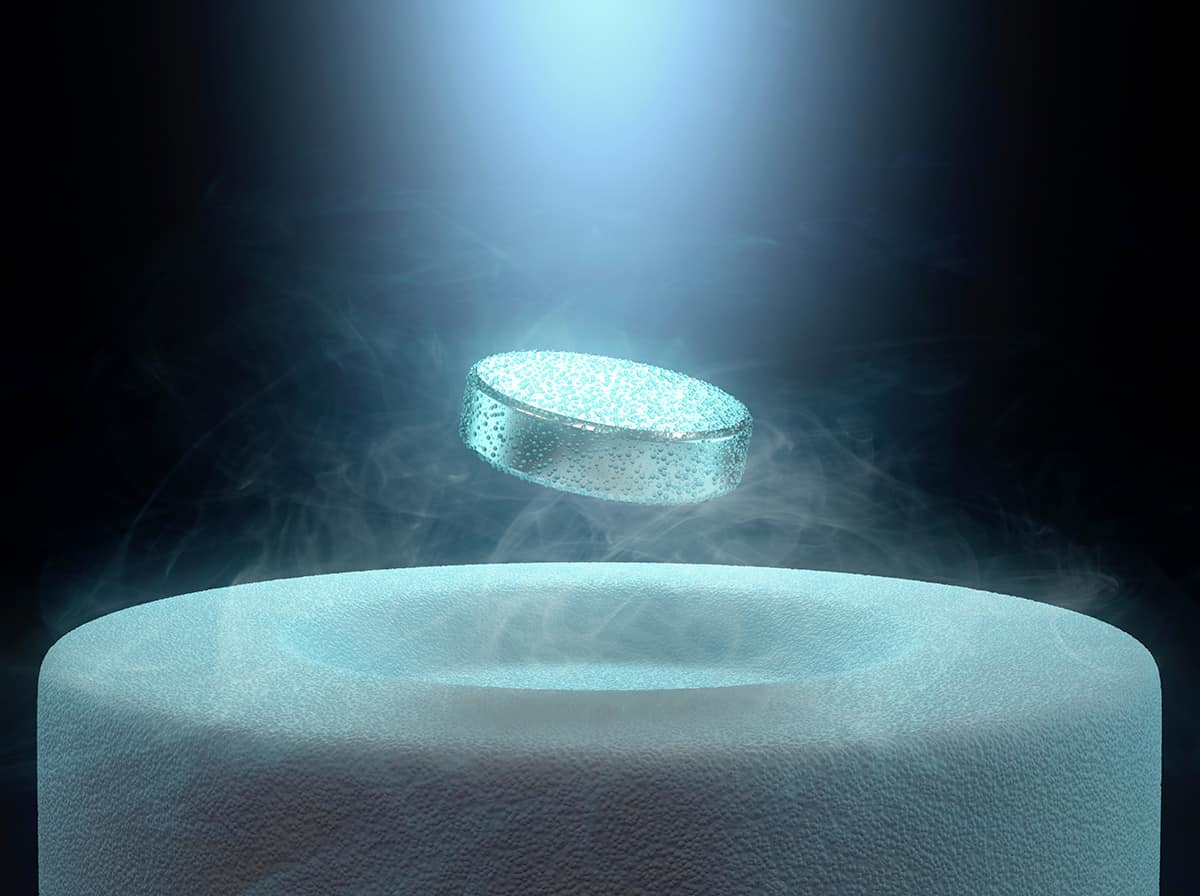
"Superconductivity representation (Courtesy: iStock/ktsimage)" (Phys.com/Korean team claims to have created the first room-temperature, ambient-pressure superconductor)


Sometimes. Researchers try to make the superconductor by using silicone and metal hybrid material. In that material metal and silicone atoms are against each other. And the photovoltaic phenomenon in silicone would replace the energy loss in metals. But that thing is not a real superconductor. 

When electricity travels on wire electrons transmit wave movement into the next atoms. Part of that energy reflects and forms a standing wave between atoms. And that standing wave is the thing that pushes atoms away from each other. Those standing waves stop the electricity. The thing that could make the home-temperature superconductor is a material that can pull electricity away from those standing waves. 

And all the time electricity requires more and more energy to travel through those standing waves. That thing causes oscillation. And the temperature in the wire starts to rise. When the temperature in wires rises distance of atoms turns longer. That thing increases the energy of standing waves until the temperature breaks the wire. 

One way to remove those standing waves is just to conduct that extra energy away. If there are no standing waves between atoms. There is no resistance. In superconduction atoms are taken as close to each other as researchers could that thing denies the standing wave. 


https://physicsworld.com/a/have-scientists-in-korea-discovered-the-first-room-temperature-ambient-pressure-superconductor/


https://www.nytimes.com/2023/07/26/science/ranga-dias-retraction-physics.html


Gluons and the strong nuclear interaction.

When we think about energy flow from the strongest to the weakest. Free energy. That causes an atom’s decay. It is formed. Or. Released in t...